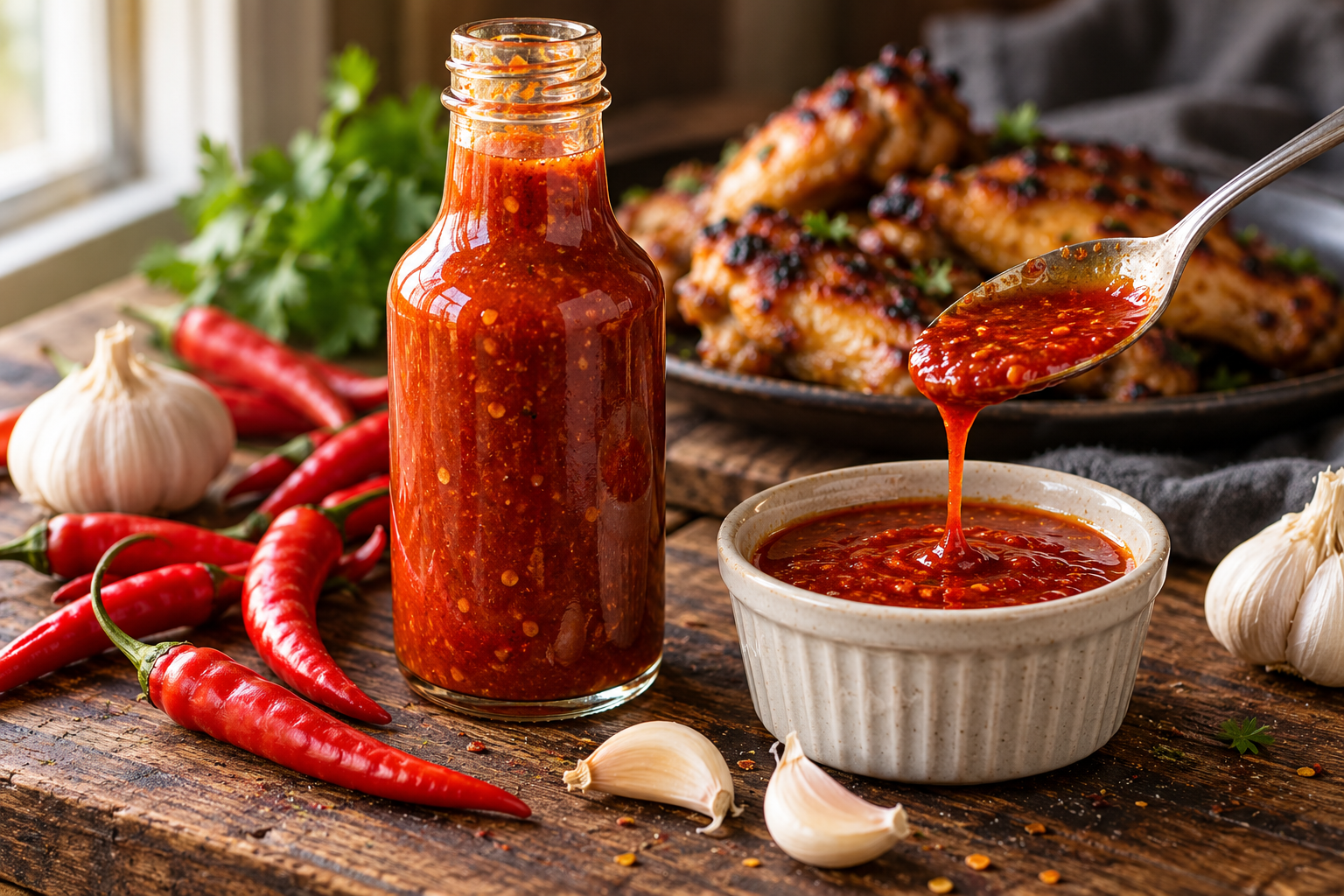
Texas Roadhouse offers hot sauce alongside its other table condiments, but the chain doesn’t publish its formula, so there’s no official recipe to copy. What you can make is a sauce in the same spirit: bright, vinegary, and peppery, with enough garlic and smoke to stand up to steak, wings, and fried appetizers. This Texas Roadhouse-style hot sauce uses fresh red chiles, garlic, and distilled white vinegar, simmered briefly and blended smooth. It takes about 35 minutes, uses pantry staples, and makes roughly a cup and a half. Here’s how to build it, adjust the heat, and keep it fresh.
Is This the Real Texas Roadhouse Hot Sauce?
No, and it’s worth being upfront about that. Texas Roadhouse hasn’t released the ingredients or brand behind its hot sauce, so any recipe online is an informed approximation. This one follows the classic Louisiana-style approach: red peppers, vinegar, salt, and garlic, with a little smoked paprika for the savory depth people tend to associate with steakhouse tables. If you like a thin, tangy, pourable sauce, this will feel familiar.
Why You’ll Love This Recipe
- You control the heat. Swap the pepper variety to make it mild, medium, or properly hot.
- Short ingredient list. Everything is easy to find, and there’s no fermenting or special equipment.
- Pourable and versatile. The texture works on eggs, wings, tacos, and steak.
- Cheaper than specialty bottles. A batch costs little and makes a generous amount.
- Make-ahead friendly. The flavor rounds out after a day in the fridge.
Ingredients You’ll Need
The full measurements are in the recipe card below. Here’s what each ingredient does so you can adjust with confidence.
Fresh red chiles. These are the heart of the sauce. Red cayenne peppers give a clean, medium-high heat and a classic hot sauce flavor. Red Fresno peppers are a little milder and fruitier. Both work, and you can blend them.
Garlic. Four cloves add savory backbone without taking over once the sauce has simmered.
Distilled white vinegar (5% acidity). Vinegar gives the sauce its tang and acts as a preservative. Choose a bottle labeled 5% acidity, and don’t swap in a weaker vinegar.
Smoked paprika and onion powder. A small amount of each adds the faint smoky, savory note that makes the sauce taste rounder than plain pepper and vinegar.
Salt and a touch of sugar. Salt sharpens the flavor. The sugar doesn’t make the sauce sweet. It just softens the vinegar’s edge.
How to Make Texas Roadhouse-Style Hot Sauce
The method is simple: soften the peppers, blend, strain, and give the sauce a short final simmer so the flavors come together.
- Prep the peppers. Wear disposable gloves, stem the chiles, and chop them roughly. Open a window or turn on the vent fan, since simmering chiles can sting your eyes and throat.
- Simmer. Cook the peppers, garlic, water, salt, and half the vinegar in a small saucepan over medium heat. Once it simmers, cover and cook for about 10 minutes, until the peppers are soft.
- Blend. Carefully transfer the mixture to a blender and add the remaining vinegar, smoked paprika, sugar, and onion powder. Vent the lid and cover it with a towel, because hot liquid builds pressure. Blend on low, then high, until completely smooth.
- Strain and finish. For a silky sauce, pour the blend through a fine-mesh strainer back into the saucepan, pressing on the solids. Simmer for 5 more minutes, then taste and adjust the salt.
- Bottle. Let it cool completely, then funnel it into a clean glass bottle or jar and refrigerate.
Expert Tips for Best Results
- Let it rest. The sauce tastes sharper on day one. After 24 hours in the fridge the vinegar mellows and the pepper flavor comes forward.
- Strain for a classic texture. Skipping the strainer gives a thicker, more rustic sauce. Straining gives the thin, pourable style typical of bottled hot sauces.
- Taste with care. Heat varies a lot from pepper to pepper. Try a drop on a plain cracker before you decide whether to add more vinegar or salt.
- Use a non-reactive pot. Stainless steel or enameled cookware is best, since vinegar can react with bare aluminum.
- Protect your hands and eyes. Wear gloves, and don’t touch your face while handling chiles.
Variations and Substitutions
- Milder sauce: Use red jalapeños or Fresno peppers in place of cayenne.
- Hotter sauce: Replace one or two of the chiles with habaneros, or leave the seeds in.
- Smokier sauce: Add an extra half teaspoon of smoked paprika, or use a small amount of chipotle powder.
- Green version: Use green jalapeños or serranos, and skip the paprika for a brighter color.
- No fresh chiles: Dried red chiles will work if you rehydrate them in hot water first, though the flavor will be deeper and less bright.
What to Serve With This Hot Sauce
- Grilled steak, burgers, and pork chops
- Chicken wings, tenders, and fried chicken
- Scrambled eggs, omelets, and breakfast potatoes
- Tacos, rice bowls, and black beans
- Fried appetizers like onion rings and fries
- A splash in chili, gumbo, or a bowl of soup
Storage and Reheating
Store the cooled sauce in a clean, airtight glass bottle or jar in the refrigerator for up to 3 to 4 weeks. Because this recipe isn’t pH-tested, treat it as a refrigerator sauce and don’t can it for shelf storage. Shake before using, since a little separation is normal. To keep it longer, freeze the sauce in an ice cube tray, move the cubes to a freezer bag, and thaw only what you need, for up to 3 months. There’s no need to reheat it. Discard the sauce if you see mold or notice an off smell.
Frequently Asked Questions
Is this the exact Texas Roadhouse hot sauce recipe?
No. Texas Roadhouse doesn’t share its formula. This is a restaurant-style sauce based on classic red-pepper-and-vinegar hot sauce.
How hot is this sauce?
With red cayenne peppers it lands in the medium-hot range. Red Fresno or jalapeño peppers make it milder, and habaneros make it much hotter.
Do I have to strain it?
No. Straining gives a smoother, thinner sauce. If you skip it, you’ll get a thicker sauce with small flecks of pepper.
Can I make this without sugar?
Yes. The teaspoon of sugar only softens the vinegar’s sharpness, so you can leave it out.
Can I store it at room temperature?
It’s safest to keep it refrigerated. Homemade sauces vary in acidity, and this recipe isn’t tested for shelf-stable canning.
Final Thoughts
You can’t copy a recipe that was never published, but you can make a hot sauce that fits the steakhouse table. This one is tangy, garlicky, and easy to adjust. Make a batch, let it rest overnight, and try it on your next steak, plate of wings, or breakfast eggs.
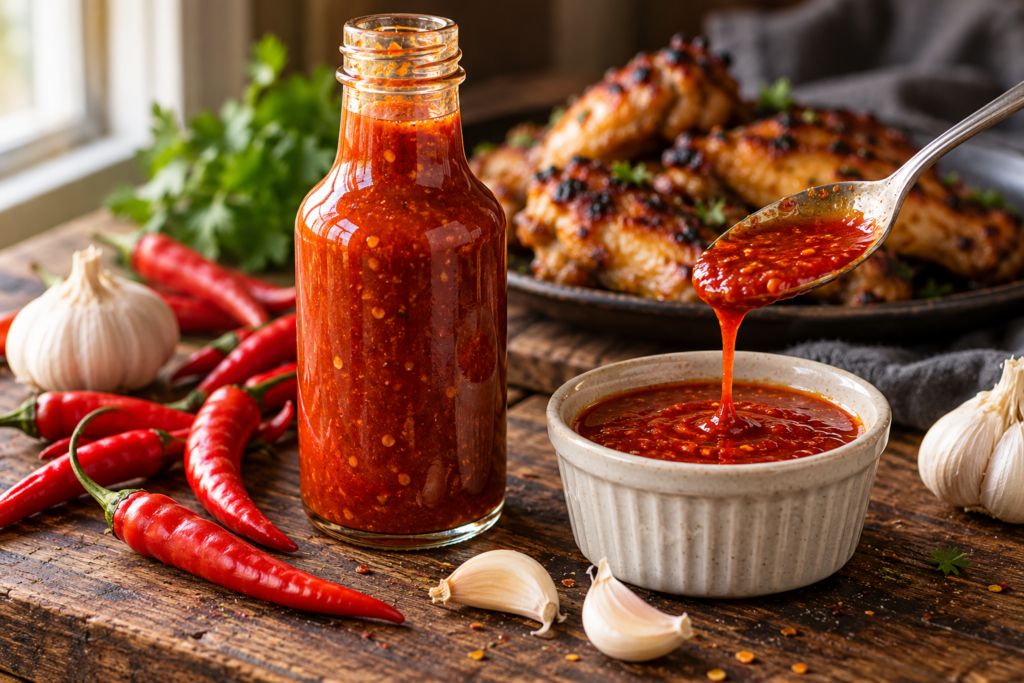
Texas Roadhouse-Style Hot Sauce
A tangy, lightly smoky homemade hot sauce made with fresh red chiles, garlic, and distilled white vinegar.
Ingredients
Instructions
- Wear disposable gloves and ventilate your kitchen. Stem and roughly chop the peppers.
- In a small non-reactive saucepan, combine the peppers, garlic, water, salt, and 1/2 cup of the vinegar. Bring to a simmer over medium heat, cover, and cook for 10 minutes, until the peppers are soft.
- Carefully transfer the mixture to a blender. Add the remaining 1/2 cup vinegar, smoked paprika, sugar, and onion powder. Vent the lid, cover it with a towel, and blend until completely smooth.
- Pour the sauce through a fine-mesh strainer back into the saucepan, pressing on the solids. Simmer for 5 minutes, then taste and adjust the salt.
- Cool completely, then pour into a clean glass bottle or jar. Refrigerate for at least 24 hours before serving for the best flavor.
Recipe Notes
This is a Texas Roadhouse-style recipe, not the official formula. Use vinegar labeled 5% acidity. Keep refrigerated and use within 3 to 4 weeks, or freeze in ice cube trays for up to 3 months. Do not can this recipe for shelf storage. Makes about 1 1/2 cups; serving size is 1 tablespoon. For a milder sauce, use Fresno peppers or red jalapeños. For more heat, add a habanero.