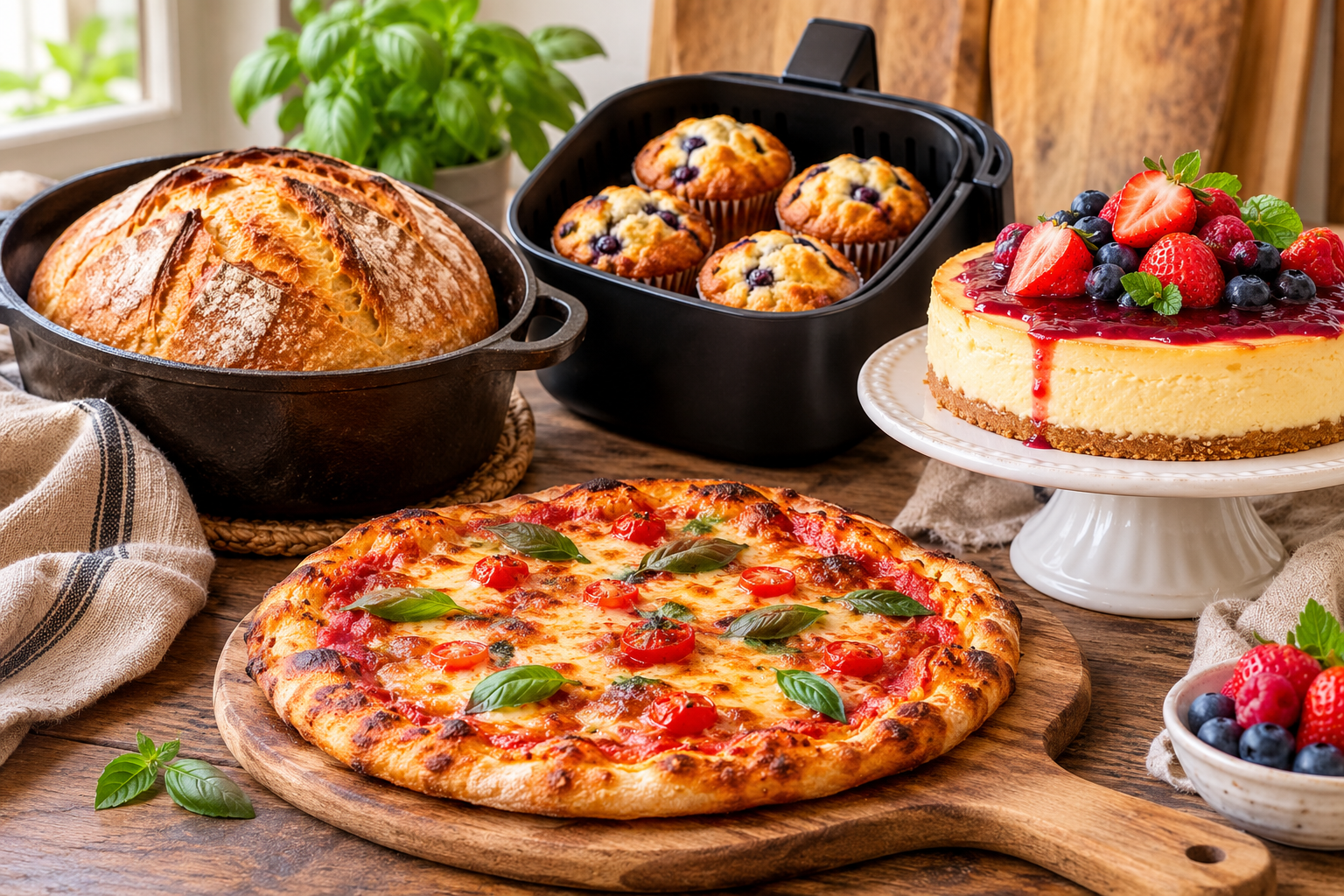
A standard oven is the default for baking, but it isn’t the only option. Air fryers, steam ovens, pizza ovens, and even the sun can all turn dough and batter into something worth eating. Each source heats differently, so the right choice depends on what you’re baking. This guide covers 15 modern heat sources, what each does well, and how to adjust your recipes so they work.
Why Try a Different Heat Source?
Different heat sources change the result. Strong, direct heat gives bread a crackly crust. Gentle, moist heat keeps cheesecake smooth. A smaller space heats faster and saves energy. Trying another method can also solve practical problems like a tiny kitchen, a hot summer, or a broken oven.
Indoor Ovens
1. Conventional Electric Oven
Electric ovens hold steady, even heat, which makes them dependable for cakes, cookies, and pastry. Most recipes are written with them in mind, so no adjustments are needed.
2. Gas Oven
Gas ovens produce a moister heat and often run hotter near the bottom. Rotate pans halfway through, and use an oven thermometer because dial temperatures can be off.
3. Convection Oven
A fan circulates hot air for faster, more even browning. It’s great for cookies, roasted vegetables, and pastry. A common rule is to lower the temperature by about 25°F or shorten the time, but check your oven’s manual. Skip it for delicate batters, since the moving air can cause uneven rising.
4. Steam-Assist Oven
Steam keeps a loaf’s surface flexible early in baking, which allows more rise and a thin, glossy crust. These ovens are an investment, but they suit artisan-style bread best.
5. Toaster Oven
A toaster oven handles small batches of cookies, biscuits, and brownies without heating the whole kitchen. Pans are smaller, and the heating elements sit close to the food, so watch the tops and tent with foil if they brown too fast.
Countertop Appliances
6. Air Fryer Oven
Larger air fryer ovens work like compact convection ovens. They preheat quickly and suit rolls, muffins, and sheet-pan bakes. Reduce the temperature a little from your recipe and check early.
7. Basket Air Fryer
Basket models bake small items well, such as hand pies, donuts, and single-serve cakes. Use a pan that fits with room for air to move, and secure parchment so it doesn’t lift into the heating element.
8. Multi-Cooker (Instant Pot Style)
Pressure cookers bake with moist heat, which suits cheesecake, custards, and steamed cakes. Place the pan on a trivet over water, and expect pale tops with no browning. Add a quick broil or torch if you want color.
9. Microwave Convection Combo
Combination units can switch between microwave, convection, or both. Use the convection setting for baking, and avoid metal pans unless the manual approves them.
Stovetop Baking
10. Induction Cooktop with a Dutch Oven
Induction heats cast iron quickly and precisely. A covered Dutch oven traps steam, so you can bake no-knead bread, flatbreads, or skillet cornbread on the cooktop. Because heat comes mostly from below, the top may stay pale.
Outdoor Heat
11. Outdoor Pizza Oven
Wood, gas, or pellet-fired pizza ovens reach very high temperatures, often 700°F or more depending on the model. Bakes finish in minutes, which suits thin-crust pizza and flatbreads. Launch with a well-floured peel, and rotate often because the heat is uneven.
12. Kamado or Ceramic Grill
Thick ceramic walls hold steady temperatures for a long time. Set up the grill for indirect heat with a baking stone, and it can handle bread, pizza, and pies. Vent adjustments take practice, so start with something forgiving.
13. Pellet Grill
Pellet grills hold a set temperature with thermostat control, which makes them one of the easier outdoor options. They add a light smoky flavor, which works with cornbread, fruit crisps, and cobblers.
14. Gas Grill
With burners on one side and food on the other, a gas grill becomes an outdoor oven. Use a baking stone or cast-iron pan to soften the heat, and keep the lid closed as much as possible.
15. Solar Oven
A solar oven uses reflected sunlight and costs nothing to run. It works best on clear, sunny days. Temperatures are typically lower than a regular oven, so it suits muffins, quick breads, and slow bakes. Allow extra time and expect variation.
How to Adjust Recipes for Any Heat Source
- Use an oven thermometer. Dial and display temperatures are often inaccurate.
- Start checking early. Smaller or faster heat sources can finish well before the recipe’s stated time.
- Use the right pan size. Pans that are too large or too small change bake time and browning.
- Judge doneness by sight and touch. Look for golden color, a clean toothpick, or a springy center rather than relying on time alone.
- Change one variable at a time. If a bake fails, adjust either temperature or time, not both.
Safety Notes
Never use charcoal grills, camp stoves, or outdoor pizza ovens indoors, because they produce carbon monoxide. Use oven mitts for cast iron and ceramic, which stay hot long after cooking. Keep appliances away from flammable items, and follow manufacturer guidance on cookware and parchment.
Frequently Asked Questions
Can I bake cake in an air fryer?
Yes, in smaller sizes. Use a pan that fits with space around it, lower the temperature, and check early. Cover the top loosely if it browns too fast.
Do I need a convection oven for good bread?
No. A Dutch oven in a regular oven traps steam and gives strong results.
Which alternative is best for beginners?
A toaster oven or air fryer oven is easy to learn because the space is small and results show up quickly.
Is a solar oven practical?
It works for patient bakers with reliable sun. It’s less suited to recipes that need high heat or exact timing.
Final Thoughts
Every heat source has strengths and quirks. Pick one that fits your kitchen and your recipe, start with a simple bake, and take notes on what you change. You’ll soon know which method gives the results you want.