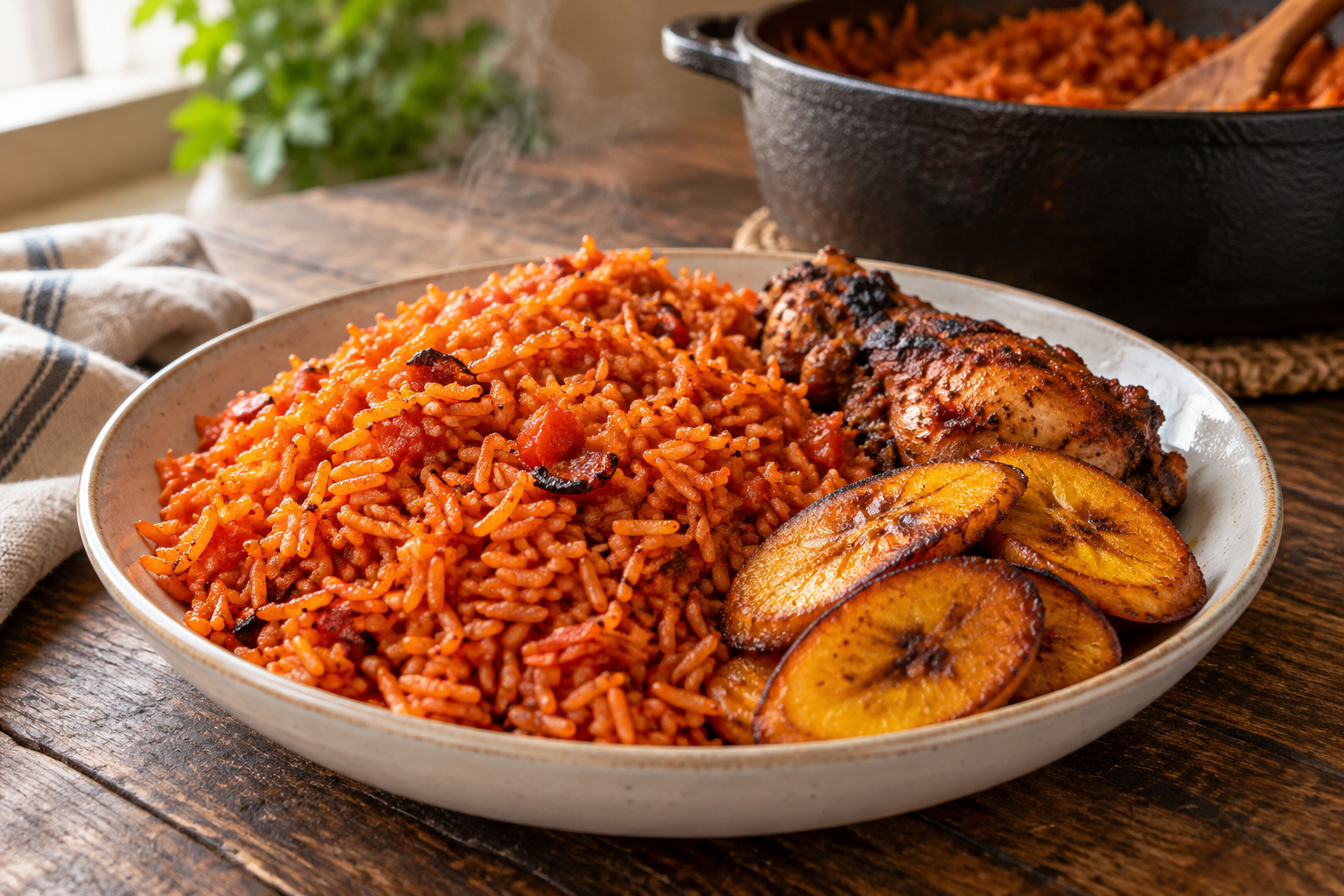
Smoky Nigerian jollof rice is the dish you find at weddings, birthdays, and holiday tables: deep orange-red grains, a rich pepper-and-tomato flavor, and a faint toasty smokiness that traditionally comes from cooking over a wood fire. You don’t need a fire pit to get there. This version builds the smoke in three layers: charred peppers and tomatoes, a little smoked paprika, and a carefully controlled toasty layer at the bottom of the pot. That way the flavor tastes deliberate, not burnt. It’s all made on a regular stovetop with ingredients from most U.S. grocery stores.
Why You’ll Love This Recipe
- Real smoky flavor without a fire. Broiling the vegetables and finishing the pot correctly gives you the party-jollof character indoors.
- Separate, fluffy grains. A thick, well-reduced base and a measured amount of stock keep the rice from turning mushy.
- Easy to find ingredients. Roma tomatoes, red bell peppers, and a habanero work perfectly.
- Great for a crowd. It feeds eight as a side and holds well for gatherings.
- Heat you control. You decide how much habanero goes in, from mild to fiery.
Ingredients You’ll Need
The full measurements are in the recipe card. Here is what each main ingredient does.
Long-grain parboiled rice is the best choice here. It’s sturdy enough to absorb a thick tomato base without breaking down. Regular long-grain white rice can work, but it’s less forgiving and tends to get soft faster.
Red bell peppers and Roma tomatoes form the base of the sauce. The peppers give color and sweetness, and the tomatoes add acidity and body. Broiling both until charred in spots is your first smoke layer.
Habanero (or Scotch bonnet) brings the heat and a fruity note that’s typical of Nigerian cooking. Remove the seeds and ribs for a milder rice.
Onion, garlic, and ginger add depth. Tomato paste deepens the color and flavor once it’s fried in oil.
Curry powder, dried thyme, bay leaves, and bouillon cubes are the classic seasoning backbone. A small amount of smoked paprika adds a gentle smoky note on top of the charred vegetables.
How to Make Smoky Nigerian Jollof Rice
- Char the vegetables. Broil the bell peppers, tomatoes, and quartered onion on a sheet pan for about 10 to 12 minutes, turning once, until the edges blister and darken in spots.
- Blend the base. Blend the roasted vegetables with the habanero, garlic, and ginger until smooth.
- Fry and reduce. Heat the oil in a heavy-bottomed pot, then cook the chopped onion for about 4 minutes. Stir in the tomato paste and fry for 3 minutes. Add the blended mixture and simmer uncovered, stirring now and then, for 25 to 30 minutes. The base is ready when it has reduced to roughly 2 cups, looks thick, and the oil separates and pools on top.
- Season. Stir in the curry powder, thyme, smoked paprika, bay leaves, crumbled bouillon, and salt. Pour in the hot stock, bring it to a boil, and taste. It should be well seasoned, because the rice will absorb much of the salt.
- Add the rinsed rice. Rinse the parboiled rice in a sieve until the water runs mostly clear, then drain well. Stir it into the pot once to submerge it, and level the surface.
- Steam. Cover the pot with a sheet of foil or parchment, then the lid, to hold in the steam. Cook on the lowest heat for about 20 minutes without stirring.
- Check the rice. Gently turn the rice from the bottom. If it’s still firm, add a splash of hot water (about 1/4 cup), re-cover, and cook 10 more minutes until tender.
- Build the smoky bottom. Uncover, leave the rice undisturbed, and cook on medium-low for 5 to 8 minutes. Switch on your vent fan. When you smell a toasty, slightly scorched aroma, turn off the heat right away. You want a deep brown layer, not black.
- Rest and fluff. Cover and let it sit for 10 minutes, then fluff from the top with a fork, folding in a little of the toasty bottom.
Expert Tips for Best Results
- Reduce the base properly. A watery base is the most common cause of mushy jollof. Keep simmering until the oil floats.
- Use a heavy pot with a tight lid. A heavy stainless pot or Dutch oven distributes heat evenly. Traditionally an aluminum pot is used, but it isn’t required. I’d avoid high heat in non-stick cookware.
- Don’t stir once the lid is on. Stirring releases starch and breaks the grains.
- Know toasty from burnt. Toasty smells nutty and roasted, and the bottom lifts in dark brown pieces. If it smells sharp or bitter, or turns black, you’ve gone too far. Stay at the stove during this step.
- Season the liquid, not the finished rice. Adjusting salt before the rice goes in gives even flavor.
Variations and Substitutions
- Vegan: Use vegetable stock and vegetable bouillon.
- Milder heat: Use half a habanero with the seeds removed, or swap in a red jalapeño.
- Extra smoke: Add 1/4 teaspoon of liquid smoke to the stock. Start small, since it’s strong.
- Tomato swap: Roma tomatoes stand in for the plum tomatoes sold in Nigerian markets. A 14-ounce can of whole peeled tomatoes also works in a pinch.
- Add protein: Stir in cooked shredded chicken or shrimp at the end, or serve the rice with fried chicken on the side.
- Rice swap: Long-grain parboiled is best. If you only have basmati, reduce the stock by about 1/2 cup.
What to Serve With Smoky Nigerian Jollof Rice
- Fried plantains for sweet contrast
- Peppered turkey, grilled chicken, or suya-style wings
- Coleslaw or a simple cucumber-tomato salad to cool the heat
- Moi moi (steamed bean pudding) for a fuller party plate
Storage and Reheating
Cool leftover rice quickly and refrigerate it within one to two hours of cooking, since cooked rice shouldn’t sit at room temperature. Store it in shallow, airtight containers for up to 3 to 4 days. You can freeze portions for up to 2 months. Reheat until steaming hot throughout (165°F), adding a splash of water and covering so the rice steams instead of drying out. Only reheat once.
Frequently Asked Questions
What makes jollof rice smoky?
Traditional party jollof gets its smokiness from cooking over a wood fire, plus the lightly toasted layer at the bottom of the pot. This recipe recreates it indoors with charred vegetables, smoked paprika, and a controlled bottom toast.
Why is my jollof rice mushy?
Usually too much liquid, a base that wasn’t reduced enough, or too much stirring. Reduce the base until the oil separates, measure the stock, and keep the lid on.
Why is my jollof rice hard in the middle?
The rice needs a little more steam. Add about 1/4 cup of hot water, cover tightly, and cook on low for another 10 minutes.
Can I make smoky jollof rice without burning it?
Yes. You can get most of the flavor from the charred vegetables and smoked paprika alone. Then do the bottom toast for only a few minutes and stop at the first toasty aroma.
What is the difference between Nigerian and Ghanaian jollof?
Cooks in both countries have strong opinions. Nigerian jollof is often associated with parboiled long-grain rice and a smoky party finish, while Ghanaian versions commonly use basmati or jasmine and a different seasoning profile. Both are delicious, and both are made in many ways.
Final Thoughts
Smoky jollof comes down to a thick, well-fried base and a careful finish. Once you’ve done it, you can adjust the heat and smokiness to your own taste. Serve it hot, with plenty on the table.
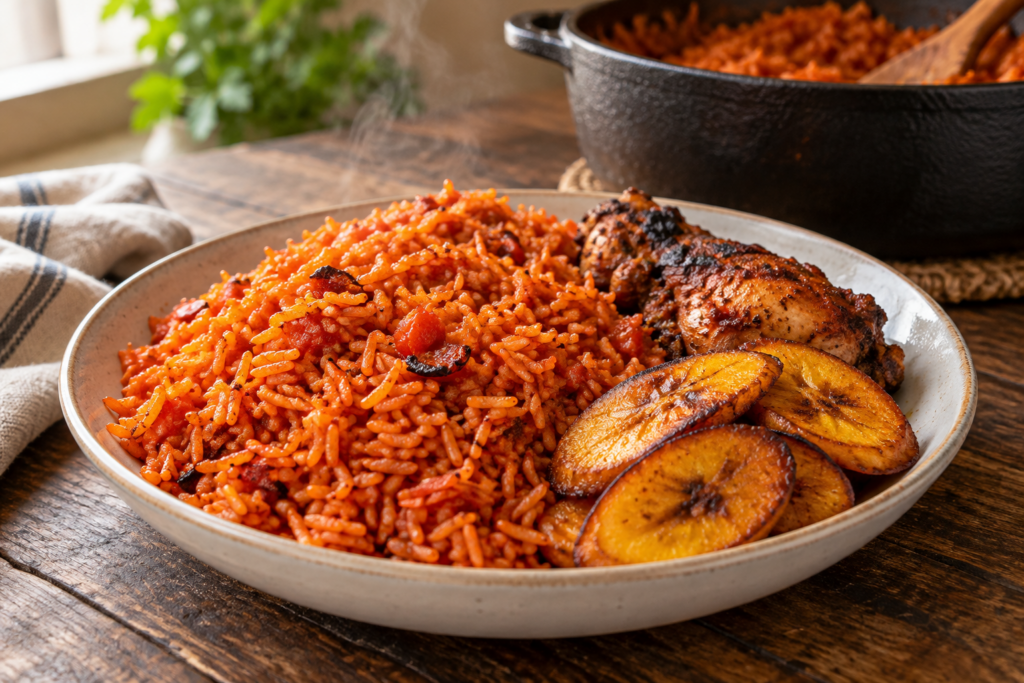
Smoky Nigerian Jollof Rice
Stovetop Nigerian party jollof rice with charred peppers and tomatoes, a thick fried tomato base, and a gentle smoky finish.
Ingredients
Instructions
- Position an oven rack about 6 inches from the broiler and heat the broiler to high. Place the bell peppers, tomatoes, and quartered red onion on a sheet pan and broil for 10 to 12 minutes, turning once, until the edges are blistered and charred in spots.
- Transfer the roasted vegetables to a blender with the habanero, garlic, and ginger. Blend until smooth.
- Heat the oil in a large heavy-bottomed pot over medium heat. Cook the chopped onion for 4 minutes until softened. Stir in the tomato paste and fry for 3 minutes.
- Add the blended mixture and simmer uncovered over medium heat for 25 to 30 minutes, stirring occasionally, until it reduces to about 2 cups, looks thick, and the oil separates and pools on top.
- Stir in the curry powder, thyme, smoked paprika, bay leaves, bouillon cubes, and salt. Add the hot stock, bring to a boil, and taste. Adjust the salt, since the rice will absorb much of it.
- Rinse the parboiled rice in a fine sieve until the water runs mostly clear, then drain well. Stir the rice into the pot once to submerge it, then level the surface.
- Cover the pot with a sheet of foil or parchment paper, then the lid. Cook on the lowest heat for 20 minutes without stirring.
- Gently turn the rice from the bottom. If it is still firm, add 1/4 cup hot water, re-cover, and cook 10 more minutes until tender.
- For the smoky finish, uncover and cook undisturbed over medium-low heat for 5 to 8 minutes with the vent fan on, staying at the stove. When you smell a toasty, lightly scorched aroma, turn off the heat immediately. The bottom should be deep brown, not black.
- Cover and rest for 10 minutes. Remove the bay leaves, fluff with a fork, and serve hot.
Recipe Notes
Reduce the tomato base until the oil separates to prevent mushy rice. Use a heavy pot with a tight lid and do not stir after covering. Stop the bottom toast at the first nutty, toasty smell; if it smells sharp or bitter, remove the pot from the heat. Refrigerate leftovers within 1 to 2 hours, keep for up to 3 to 4 days, and reheat until steaming hot (165°F).