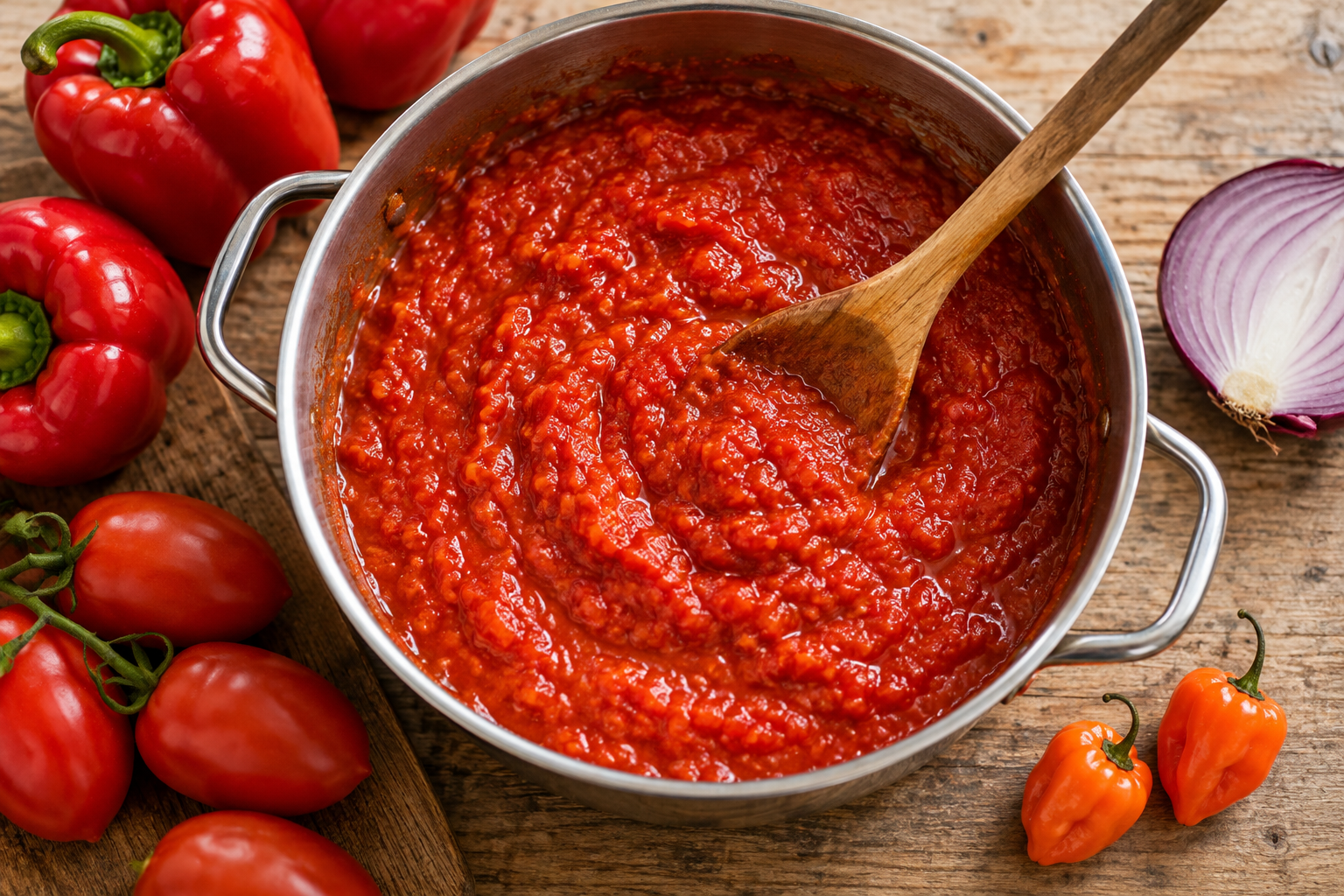
If you cook West African food, you’ve probably noticed that so many dishes start the same way: with a pot of vivid red, blended peppers. That base is Nigerian pepper mix, also called ata lilo or stew base. It’s a puree of red bell peppers, tomatoes, onion, and a hot pepper, and once it’s cooked down, it carries the color and flavor of jollof rice, pepper stew, and more. This peppered mix recipe makes a big batch you can portion and freeze, so weeknight dinners start with the hard part already done.
Why You’ll Love This Recipe
- It saves time later. Blend and cook once, then pull a portion from the freezer whenever a recipe calls for stew base.
- You control the heat. The amount of hot pepper is yours to set, from mild to very spicy.
- It’s built from ordinary ingredients. Bell peppers, tomatoes, and onions are easy to find at any US grocery store.
- It’s versatile. The same base works for rice, stews, soups, and sauces.
- It’s simple. You need a blender, a wide pot, and about 40 minutes.
Ingredients You’ll Need
The full measurements are in the recipe card. Here’s what each ingredient does, so you can adjust with confidence.
Red bell peppers are the largest part of the mix. In Nigerian cooking, the pepper is called tatashe. It gives the base its bright red color and a mild, slightly sweet body. Red bell peppers are the easiest stand-in in the US.
Tomatoes add acidity and sweetness. Roma tomatoes work well because they’re meaty and less watery than many round varieties, which means less simmering time.
Onion adds sweetness and savory depth. Red or yellow both work.
Habanero or scotch bonnet peppers supply the heat and a fruity aroma. Scotch bonnets (ata rodo) are the traditional choice, and habaneros are a close, widely available substitute.
Garlic and salt are optional. Some cooks leave garlic out of the base and add it later in the specific dish, so you can go either way.
How to Make Nigerian Pepper Mix
The method has three stages: prep, blend, and cook down.
1. Prep the peppers. Remove the stems from the bell peppers and hot peppers. Seed the bell peppers, since the seeds can add bitterness and extra water to the blend. Wear gloves when handling habaneros or scotch bonnets, and keep your hands away from your face.
2. Blend in batches. Roughly chop everything and blend with a small amount of water until the mix is smooth. Blending in batches is easier on your blender and gives a more even texture. If you want a thicker, slightly textured base, pulse rather than blend continuously.
3. Cook it down. Pour the puree into a wide pot, bring it to a boil, then lower the heat to a steady simmer. Cook uncovered, stirring now and then, until it has thickened and reduced by about a third. Cooking removes excess water, deepens the flavor, and makes the mix easier to store. A wide pot helps because more surface area means faster evaporation.
4. Season and cool. Add salt if you like, taste, and let the mix cool before portioning.
Expert Tips for Best Results
- Control the water. Watery pepper mix makes watery jollof rice. Seed the bell peppers, use meaty tomatoes, and simmer until the puree visibly thickens.
- Start with less heat than you think. You can always add more chili to a dish later, but you can’t take it out of a full batch. Begin with one hot pepper and increase next time.
- Blend in batches. Overfilling the blender causes uneven texture and splatter.
- Taste after cooking. Cooking concentrates both sweetness and heat, so adjust at the end, not before.
- Use a non-reactive pot. A stainless steel or enameled pot keeps the acidic tomatoes from picking up a metallic taste.
Variations and Substitutions
- Smoky version: Roast or broil the peppers, tomatoes, and onion until lightly charred before blending. Remove any very blackened bits first.
- Mild version: Use half a habanero with the seeds and membranes removed, or replace the hot pepper with a milder chili.
- Extra spicy version: Add more habaneros or scotch bonnets, one at a time, tasting as you go.
- Canned tomatoes: Canned plum tomatoes are a practical swap when fresh tomatoes are out of season. Drain some of the liquid first.
- Raw vs. cooked: You can use the blended mix raw as a base for dishes that will be cooked for a long time. Cooking it first, as in this recipe, gives a milder flavor and better storage.
What to Serve With Nigerian Pepper Mix
Pepper mix isn’t eaten on its own. It’s the starting point for other dishes:
- Jollof rice: Fry the mix in oil, add stock, then cook the rice in it.
- Pepper stew: Simmer the mix with chicken, beef, or fish.
- Ata dindin: Fry the mix in plenty of oil for a rich, spicy sauce.
- Egusi, okra, or other soups: Use it as the tomato-pepper foundation.
- Beans, eggs, or yams: Spoon a little warmed mix over simple staples for quick meals.
Storage and Reheating
Cool the pepper mix promptly and refrigerate it within two hours of cooking. In an airtight container, it keeps in the refrigerator for up to 5 days. For longer storage, freeze it in portions for up to 6 months. Ice cube trays work well for small amounts, and freezer-safe containers suit larger portions. Leave a little room at the top, since the mix expands as it freezes.
Thaw frozen portions overnight in the refrigerator. When you reheat, bring the mix to a steaming-hot temperature of 165°F (74°C) before using it, and don’t refreeze it once thawed.
Frequently Asked Questions
What is Nigerian pepper mix?
It’s a blended base of red bell peppers, tomatoes, onion, and hot peppers, used to start many West African stews, rice dishes, and sauces. It’s also called ata lilo or stew base.
Can I use habanero instead of scotch bonnet?
Yes. Habaneros are closely related and easier to find in US stores. The heat is similar, though the flavor is slightly different.
Do I have to cook the pepper mix before using it?
Not always, but cooking it first removes excess water, softens the raw edge of the peppers and onion, and helps it keep longer in the refrigerator or freezer.
How do I make the mix less spicy?
Use fewer hot peppers, remove their seeds and membranes, or swap in a milder pepper. You can also add more red bell pepper and tomato to balance the heat.
Final Thoughts
A good batch of pepper mix is one of the most useful things you can keep in your freezer. Make a big pot, portion it, and you’ll have the base for many meals ready whenever you need it.
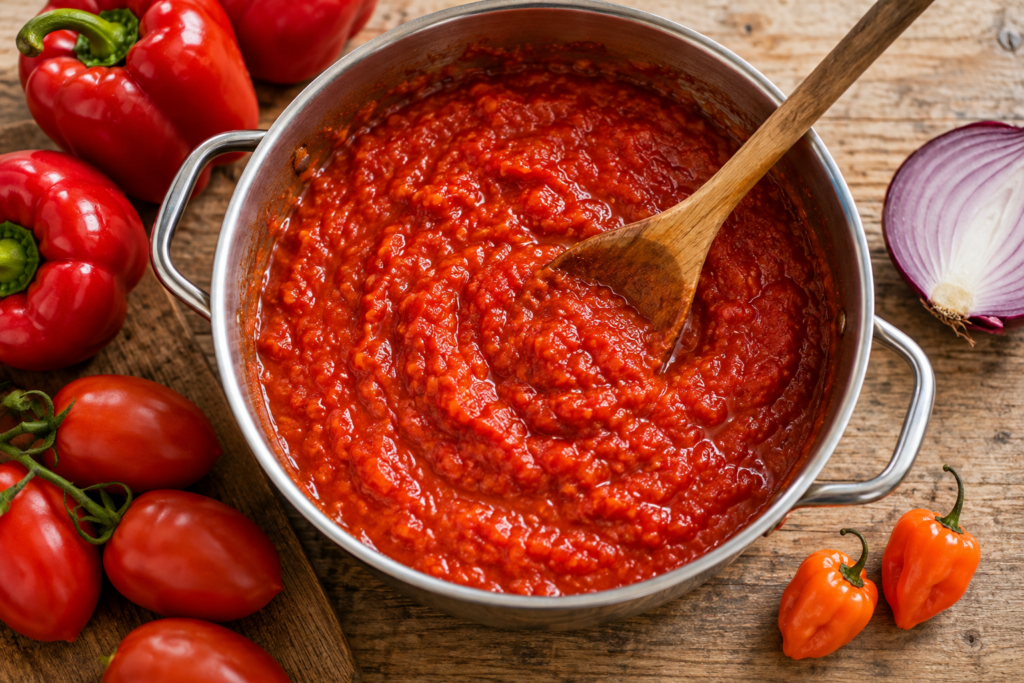
Nigerian Pepper Mix (Ata Lilo Stew Base)
A smooth, cooked-down blend of red bell peppers, tomatoes, onion, and habanero used as a base for jollof rice, stews, and sauces.
Ingredients
Instructions
- Wash all the vegetables. Remove the stems from the bell peppers and hot peppers, and remove the seeds from the bell peppers. Wear gloves when handling the hot peppers.
- Roughly chop the bell peppers, tomatoes, and onion so they blend easily.
- Add the vegetables, hot peppers, garlic if using, and water to a blender in batches. Blend until smooth, or pulse for a slightly textured mix.
- Pour the blended mixture into a wide, non-reactive pot and bring to a boil over medium-high heat.
- Reduce the heat to medium-low and simmer uncovered for 20 to 25 minutes, stirring occasionally, until the mix has thickened and reduced by about one third.
- Stir in the salt, taste, and adjust. Let the pepper mix cool to room temperature, within 2 hours.
- Transfer to airtight containers and refrigerate for up to 5 days, or freeze in portions for up to 6 months. Reheat until steaming hot (165°F) before using.
Recipe Notes
Makes about 4 to 5 cups. Start with one habanero if you prefer less heat. Seed the bell peppers and simmer until visibly thickened to avoid a watery base. Freeze in ice cube trays or small containers for easy portions. Do not refreeze once thawed.