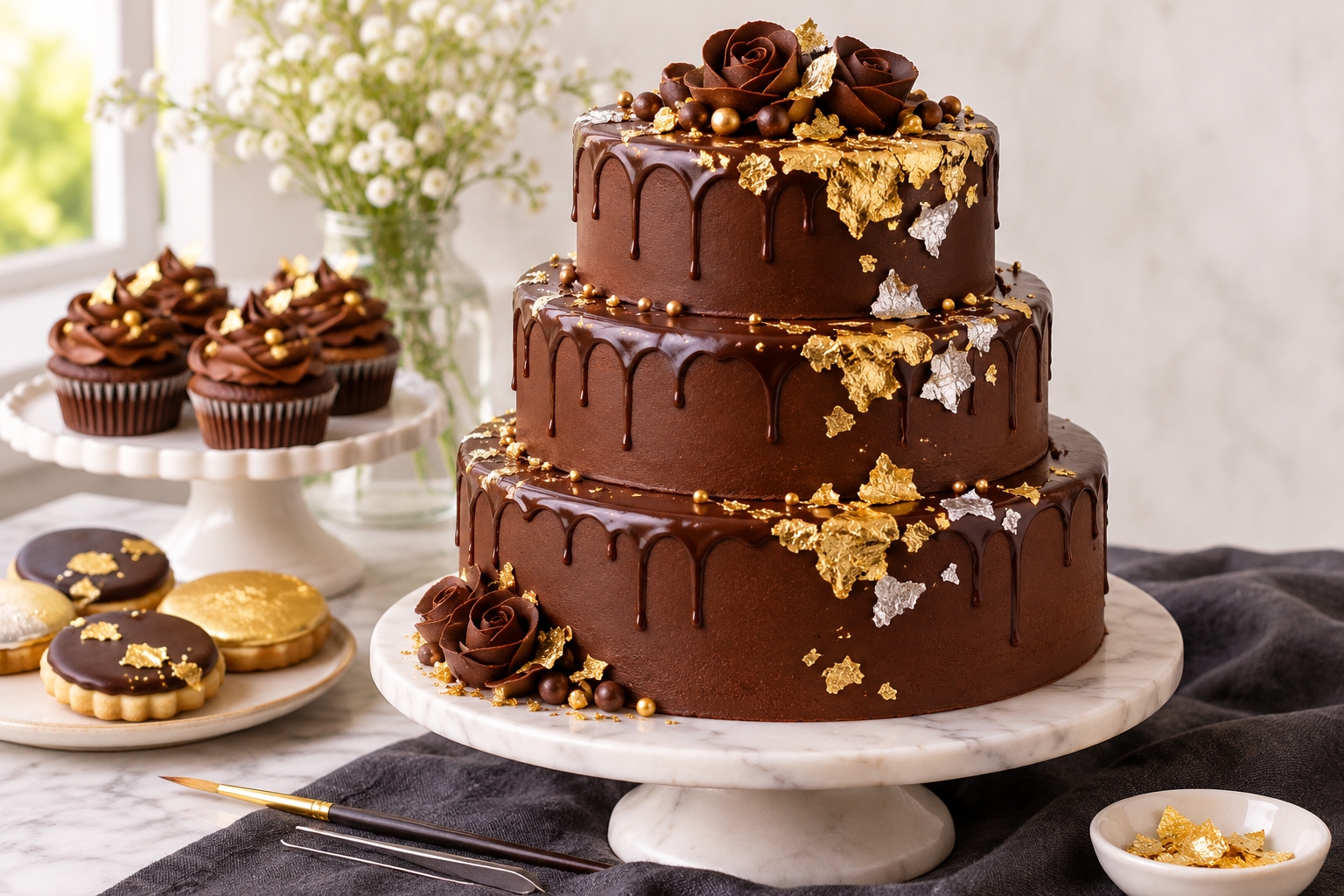
A plain chocolate cake or a simple tray of sugar cookies can look like it came from a high-end bakery with a few touches of metallic shine. Edible gold and silver accents work on almost any bake, but they come in several forms, and not every shiny product is safe to eat. This guide covers the main options, how to tell what is truly edible, and how to apply each one cleanly. It also covers storage, so your decorations still look good when you serve them.
Why You’ll Love Edible Gold and Silver Accents
- A little goes a long way. A few flakes or one painted line can make a simple dessert look finished.
- They work on many bakes. Cakes, cupcakes, cookies, brownies, truffles, macarons, and cheesecakes can all take a metallic touch.
- You can scale the effort. Tweezers and a few flakes take a minute. A fully gilded cake takes patience.
- They pair with simple bakes. Metallics suit weddings, birthdays, anniversaries, and holiday tables without needing complicated piping.
Your Options: Leaf, Flakes, Luster Dust, and Paint
Each form gives a different look, so it helps to match the product to the job.
- Gold or silver leaf sheets: Very thin metal sheets that give a mirror-like finish on large, smooth areas such as fondant. They come as loose sheets or on transfer paper. Transfer sheets are easier for beginners because you press the paper against the surface instead of lifting the leaf by hand.
- Flakes: Small torn pieces of leaf. They suit chocolate, ganache, cupcakes, and cheesecake, where you want a scattered look.
- Edible luster dust: A fine metallic powder you can dust on dry or mix into paint. It works well for details, cookies, and textured surfaces where leaf would tear.
- Edible sprays and pre-made paints: Convenient for covering a large area quickly, though you lose the foil-like look of real leaf.
“Edible” and “Non-Toxic” Are Not the Same Thing
This is the most important buying rule. Some metallic dusts and glitters are made for display only. Labels such as “non-toxic,” “for decorative purposes only,” or “remove before eating” mean the product is not meant to be eaten. A cake topper that will be taken off before serving is a fine place for them. Frosting is not.
For anything that will be eaten, look for these signs:
- The label says edible or food grade.
- The package includes a full ingredient list.
- Gold and silver leaf is described as real metal, with gold labeled 23K or 24K.
Imitation leaf, craft gilding sheets, and cheap unlabeled glitter should never go on food, even if they look identical. In the U.S., there are no explicit FDA standards for gold leaf itself, so buying from a baking-supply seller that clearly labels the product as edible matters even more. If you are unsure about a product, skip it.
How to Add Gold and Silver Accents to Your Bakes
Applying Leaf to Fondant
- Let the fondant dry and firm up first. Some leaf suppliers suggest waiting overnight.
- Brush a very thin layer of water over the area with a clean, food-only brush. Fondant should feel slightly tacky, not wet. Thick edible glue can leave lumps under the leaf.
- For transfer sheets, lay the sheet against the tacky surface and press lightly on the back so the leaf releases.
- For loose sheets, lift the leaf gently by a corner and lay it down, then tap it into place with a soft, dry brush. Avoid pressing hard because the leaf tears easily.
- Patch gaps with small torn pieces. Slight cracks and gaps look natural, so don’t aim for perfect coverage.
Adding Flakes to Buttercream, Ganache, and Chocolate
Leaf sticks best to a surface that is slightly tacky but not melting. Chill buttercream or ganache until it is just set, then pick up flakes with clean tweezers or a dry brush and place them where you want them. Try to touch the leaf as little as possible, because it sticks to warm fingers.
Painting with Luster Dust
Mix a small amount of edible luster dust with a few drops of water on a clean palette or small dish until it looks like thin paint. Apply it with a fine brush onto fully dry royal icing, fondant, or chocolate. For a softer shimmer, brush the dry powder over the surface with no liquid. The recipe card below gives exact amounts.
Expert Tips for Best Results
- Keep a dedicated brush set. Never use a brush that has touched craft paint or non-food products.
- Work in a draft-free spot. Even a gentle breeze can fold or blow away loose leaf. Turn off fans and close nearby windows.
- Keep your hands and tools dry. Moisture makes leaf cling to the wrong place.
- Start small. Practice on a cookie or a scrap of fondant before you commit to a full cake.
- Use contrast. Gold shows up best on deep colors such as chocolate, navy, burgundy, or forest green. Silver looks crisp on white, blue, and gray.
- Decorate close to serving time. Fresh application keeps the finish bright.
Variations and Substitutions
- No leaf? Use edible gold or silver luster dust painted or brushed on instead. The finish is softer but still shimmery.
- Want less work? Choose edible metallic sprinkles or sprays that are clearly labeled edible with an ingredient list.
- Silver or gold? They are applied the same way. Use one metal for a clean look or both for a more festive one.
- Tight budget? A single flake-style jar or a small luster dust jar is enough to decorate many cupcakes or cookies.
What to Decorate with Gold and Silver
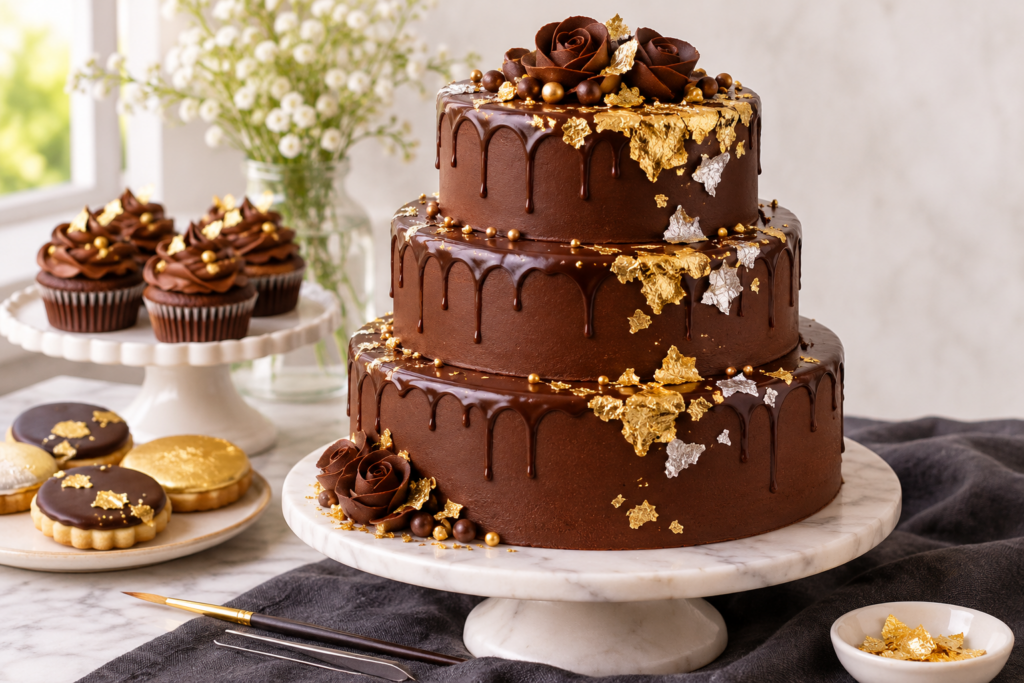
- Chocolate or red velvet cake with a few gold flakes on top
- Cheesecake with a gold-brushed edge
- Sugar cookies with painted gold borders or monograms
- Cupcakes topped with a single silver flake
- Chocolate truffles dusted with luster dust
- Macarons with a painted gold stripe
Storage and Food Safety
Store unused leaf flat in its original booklet in a cool, dry place so the sheets do not crumple or pick up moisture. Store luster dust tightly closed, away from humidity.
For decorated bakes, follow the storage rules of the cake or cookie underneath. Anything with dairy-based frosting, cream cheese, or custard should stay refrigerated. Moisture can dull or spot metallic finishes, so keep decorated desserts in a covered box and let them sit closed for a few minutes after taking them out of the fridge so condensation doesn’t form on the surface. If a product is labeled non-edible, remove it before eating.
Frequently Asked Questions
Is edible gold leaf safe to eat?
Gold leaf sold as edible, typically 23K or 24K, is intended for use on food and is used in the EU as additive E175. It is flavorless. Only use products that are clearly labeled edible.
Can I eat luster dust labeled “non-toxic”?
No. “Non-toxic” does not mean edible. Only use dusts labeled edible that include an ingredient list.
Can I use craft gold leaf or imitation gold sheets?
Not on food. Imitation leaf is made from other metals and is not meant to be eaten. It can be used only on display pieces that will not be served.
Will gold or silver leaf stick to buttercream?
Yes, if the buttercream is cold and slightly tacky. Soft or melting frosting tends to swallow the leaf. Firm, smooth surfaces such as chilled ganache or dry fondant give the cleanest result.
Does edible gold taste like anything?
No. It adds appearance only.
Final Thoughts
Edible gold and silver can turn an ordinary bake into something special without much skill. Choose products that are clearly labeled edible, practice on a small piece first, and add metallic touches sparingly so they stand out. You can use the gold paint recipe below on cookies, cakes, and chocolates.
Homemade Edible Gold Paint
A quick, small-batch gold paint made from edible luster dust, used to add metallic details to cookies, fondant, and chocolate.
Ingredients
Instructions
- Place the edible gold luster dust on a clean, dry palette or small dish.
- Add a few drops of water and stir with a clean brush until the mixture looks like smooth, thin paint. Add more water drop by drop only if needed.
- For a smoother, slightly glossy finish, stir in the light corn syrup.
- Test the paint on a scrap of fondant or a spare cookie to check the color and coverage.
- Paint onto fully dry royal icing, fondant, or chocolate with a fine food-only brush. Let it dry completely before stacking or boxing.
Recipe Notes
Only use dust labeled edible with an ingredient list. Products labeled non-toxic or for decorative purposes only are not meant to be eaten. Mix small amounts at a time, since the paint thickens as the water evaporates. Stir in a drop of water to loosen it.