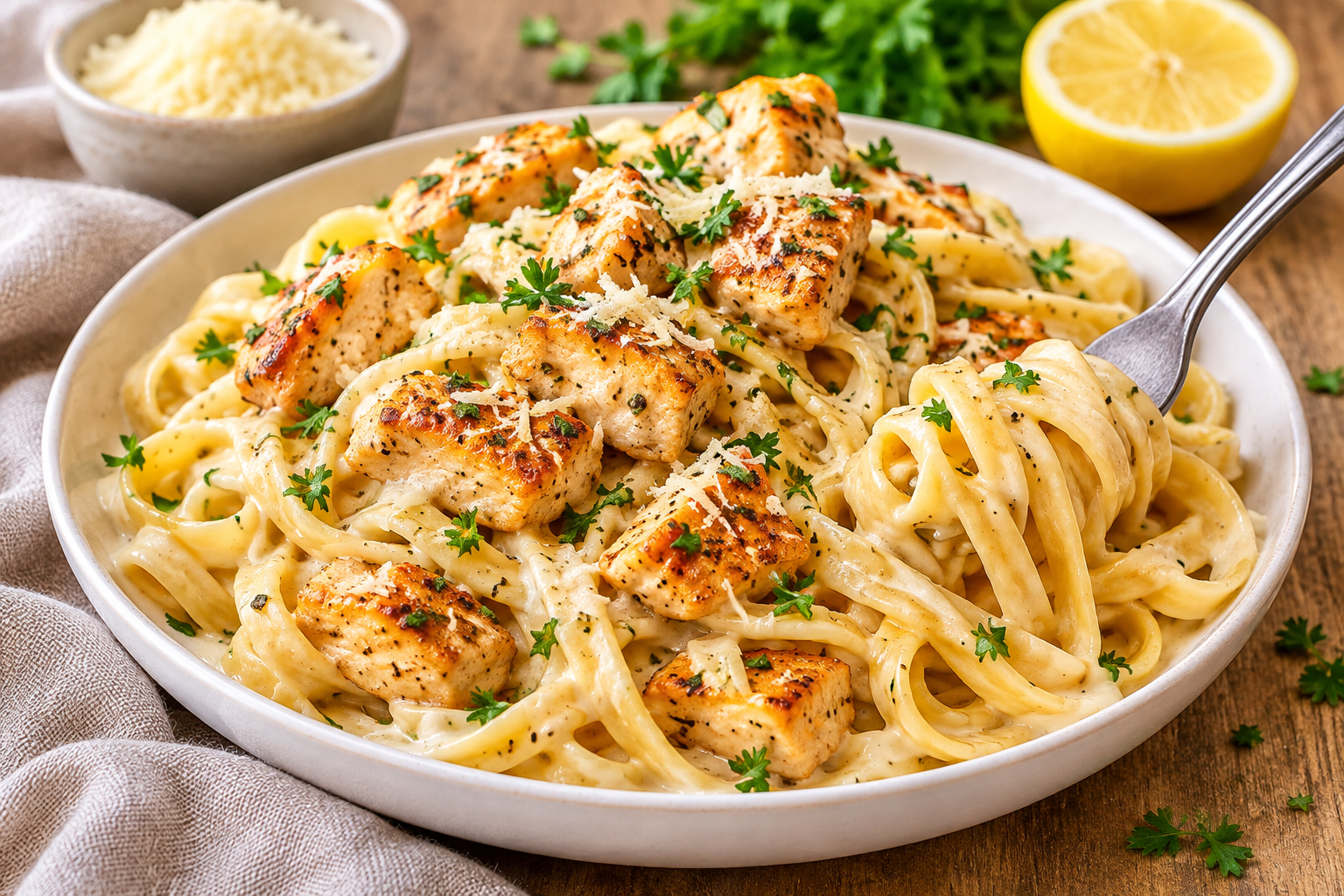
Garlic butter chicken with Parmesan pasta is the kind of dinner that feels special but doesn’t ask much of you. Chicken breast is cut into bite-sized pieces, seared until golden, and finished with garlic butter. Then the same skillet makes a silky Parmesan sauce that clings to every strand of pasta. Everything comes together in about 30 minutes, with one pot for the pasta and one skillet for the rest. This guide covers the details that make the difference: how to keep the chicken juicy, how to keep the garlic from turning bitter, and how to get a smooth sauce instead of a grainy one.
Why You’ll Love This Recipe
- It’s fast. The pasta boils while the chicken sears, so you aren’t waiting on any one step.
- Minimal cleanup. One pot and one skillet. The sauce is built right on the browned bits left from the chicken.
- Familiar ingredients. Chicken, pasta, butter, garlic, cream, and Parmesan are easy to find at any grocery store.
- It suits picky eaters. The flavors are rich and mild, and the bite-sized chicken pieces are easy to eat.
- It’s flexible. You can swap the pasta, add vegetables, or lighten the sauce without changing the method.
Ingredients You’ll Need
The full measurements are in the recipe card below. Here is what each main ingredient does, so you can make good substitutions.
Chicken breast. Boneless, skinless breasts cut into 1-inch pieces cook quickly and evenly. Uniform size matters more than anything else here, because small pieces dry out while large ones stay undercooked.
Butter and garlic. This pair is the flavor base. Unsalted butter lets you control the seasoning, and fresh garlic gives a sweeter, rounder taste than jarred.
Heavy cream and chicken broth. The broth loosens the pan and adds savory depth. The cream makes the sauce rich and keeps the cheese from clumping as it melts.
Parmesan cheese. Grate it fresh from a block if you can. Pre-shredded cheese is coated to prevent caking, which can make the sauce slightly grainy.
Pasta and pasta water. Fettuccine and penne both work well. The starchy cooking water helps the sauce cling to the pasta and lets you adjust the thickness at the end.
Lemon juice, parsley, and seasonings. Paprika and Italian seasoning flavor the chicken. A small squeeze of lemon at the end brightens the rich sauce, and parsley adds freshness.
How to Make Garlic Butter Chicken with Parmesan Pasta
Here is the process in brief. Follow the recipe card for exact amounts.
1. Start the pasta. Boil it in well-salted water until al dente, then scoop out about a cup of the cooking water before draining. The pasta will finish in the sauce, so don’t overcook it.
2. Season and sear the chicken. Pat the pieces dry, since moisture prevents browning, and season them. Sear in a hot skillet in a single layer, turning once or twice, until golden and cooked through. Don’t crowd the pan, or the chicken will steam instead of brown. Cook in two batches if needed.
3. Add the garlic butter. Lower the heat slightly, add butter and garlic, and stir for 30 to 45 seconds, just until fragrant. Garlic burns fast, and burnt garlic tastes bitter. Move the chicken to a plate.
4. Build the sauce. In the same skillet, melt a little more butter, add garlic, then pour in the broth and scrape up the browned bits. Add the cream and simmer gently until it thickens slightly.
5. Melt in the Parmesan. Turn the heat to low and add the cheese a handful at a time, stirring until smooth. High heat can make cheese sauces separate.
6. Toss and serve. Add the drained pasta, then loosen the sauce with splashes of reserved pasta water until glossy. Return the chicken and any juices from the plate, finish with lemon juice and parsley, and serve right away.
Expert Tips for Best Results
- Check the chicken’s temperature. Chicken is safe at an internal temperature of 165°F. Checking one of the larger pieces with an instant-read thermometer is more reliable than guessing by color.
- Keep the heat low once the cheese goes in. Overheated Parmesan turns grainy and oily. Take the skillet off the burner for a moment if it starts bubbling hard.
- Add pasta water gradually. A tablespoon or two at a time lets you reach the texture you like. The sauce thickens as it sits, so keep it slightly looser than you want it at the table.
- Taste before the final salt. Parmesan and broth are both salty, so season at the end.
- Use a large skillet. A 12-inch skillet gives the chicken room to brown and leaves space to toss the pasta in the sauce.
- Serve right away. Cream sauces tighten as they cool, and the pasta keeps absorbing liquid.
Variations and Substitutions
- Chicken thighs: Boneless, skinless thighs are more forgiving and stay juicy. Cut them to the same size and cook until they reach 165°F.
- Lighter sauce: Replace the cream with whole milk plus an extra splash of reserved pasta water. The sauce will be thinner and less rich, but still good. Add the cheese off the heat to keep it smooth.
- Add vegetables: Stir in a few handfuls of baby spinach at the end, or toss in steamed broccoli florets or halved cherry tomatoes.
- Add heat: Red pepper flakes with the garlic give a gentle kick.
- Different pasta: Spaghetti, linguine, rotini, or bowtie pasta all work. Shapes with ridges or curls catch more sauce.
- Cheese swaps: Pecorino Romano is sharper and saltier, so use a little less. A small amount of mozzarella stirred in at the end makes the dish stretchier.
- Gluten-free: Use your favorite gluten-free pasta and check the broth label. Cooking times and the amount of pasta water needed may differ.
What to Serve With Garlic Butter Chicken Parmesan Pasta
Since the pasta is rich, simple sides work best.
- A crisp green salad with a lemony vinaigrette
- Roasted or steamed broccoli, green beans, or asparagus
- Garlic bread or warm dinner rolls for mopping up the sauce
- Roasted cherry tomatoes for a bit of acidity
Storage and Reheating
Refrigerator: Cool leftovers and refrigerate them within two hours of cooking. Store in an airtight container for up to 3 to 4 days.
Reheating: Warm the pasta in a skillet over low heat with a splash of milk, broth, or water, stirring until the sauce loosens. A microwave also works. Heat in short bursts and stir between them. Make sure leftovers reach 165°F throughout.
Freezing: This dish is best fresh. Cream-based sauces can separate and turn grainy after freezing and thawing, and the pasta softens. If you do freeze it, use it within about two months and expect some change in texture.
Frequently Asked Questions
How do I keep the chicken from drying out?
Cut the pieces evenly, pat them dry, and cook them over medium-high heat without overcrowding the pan. Remove them as soon as they reach 165°F. They finish warming when they’re returned to the sauce, so they don’t need extra cooking time.
Why did my Parmesan sauce turn grainy?
The usual causes are heat that’s too high, pre-shredded cheese, or adding all the cheese at once. Turn the heat to low, use freshly grated Parmesan, and add it gradually, stirring between additions.
Can I make this without heavy cream?
Yes. Use whole milk, or use more broth and reserved pasta water. The sauce will be lighter and less rich. Add the cheese with the heat very low, and rely on the starchy pasta water for body.
Can I use pre-cooked or leftover chicken?
You can. Skip the searing step, warm the chicken in the garlic butter, and then make the sauce as directed. Seared fresh chicken adds more browned flavor to the sauce, but leftover chicken saves time.
Final Thoughts
This is an easy weeknight pasta that rewards a few small habits: evenly cut chicken, gentle heat once the cheese goes in, and a splash of pasta water at the end. Once you’ve made it a time or two, it’s simple to adjust with different vegetables, pasta shapes, or a lighter sauce.
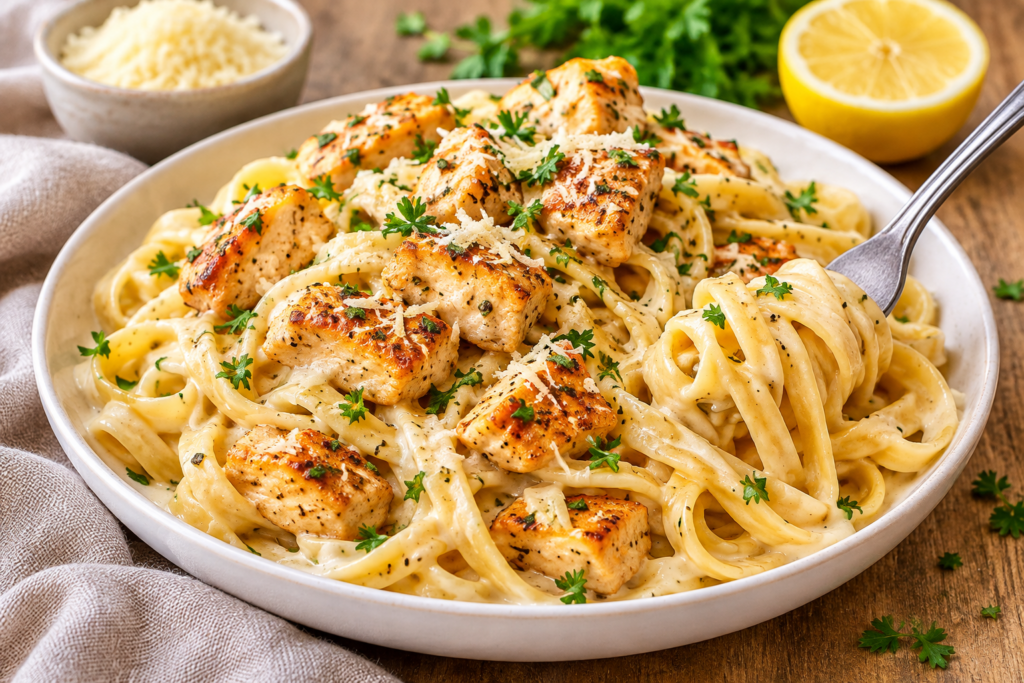
Garlic Butter Chicken with Parmesan Pasta
Seared garlic butter chicken bites tossed with creamy Parmesan pasta, made with one pot for the pasta and one skillet for the chicken and sauce.
Ingredients
Instructions
- Bring a large pot of generously salted water to a boil. Cook the pasta until al dente according to package directions. Scoop out about 1 cup of the pasta cooking water, then drain the pasta.
- While the pasta cooks, pat the chicken pieces dry and toss them with 1/2 teaspoon of the salt, the black pepper, paprika, and Italian seasoning.
- Heat the olive oil and 1 tablespoon of the butter in a large 12-inch skillet over medium-high heat. Add the chicken in a single layer, working in two batches if needed. Cook, turning occasionally, for 5 to 7 minutes until golden and cooked through to an internal temperature of 165°F.
- Reduce the heat to medium-low. Add 2 tablespoons of the butter and 3 of the minced garlic cloves to the chicken and stir for 30 to 45 seconds until fragrant. Transfer the chicken and any garlic butter to a plate.
- In the same skillet over medium-low heat, melt the remaining 1 tablespoon butter. Add the remaining 2 garlic cloves and cook for 30 seconds. Pour in the chicken broth and scrape up the browned bits from the bottom of the pan. Simmer for 1 minute.
- Stir in the heavy cream and simmer gently for 2 to 3 minutes until slightly thickened. Reduce the heat to low.
- Add the Parmesan a handful at a time, stirring until each addition melts and the sauce is smooth. Stir in the remaining 1/4 teaspoon salt, adjusting to taste.
- Add the drained pasta to the skillet and toss to coat. Add reserved pasta water 1 to 2 tablespoons at a time until the sauce is glossy and loose enough to coat the pasta.
- Return the chicken and any juices to the skillet. Stir in the lemon juice and toss gently to combine. Top with parsley and red pepper flakes if using, and serve immediately.
Recipe Notes
Cut the chicken into evenly sized pieces so it cooks at the same rate. Keep the heat low once the Parmesan goes in to prevent a grainy sauce, and use freshly grated cheese for the smoothest texture. The sauce thickens as it sits, so add extra pasta water if needed. Refrigerate leftovers within 2 hours and use within 3 to 4 days. Reheat to 165°F with a splash of milk, broth, or water.