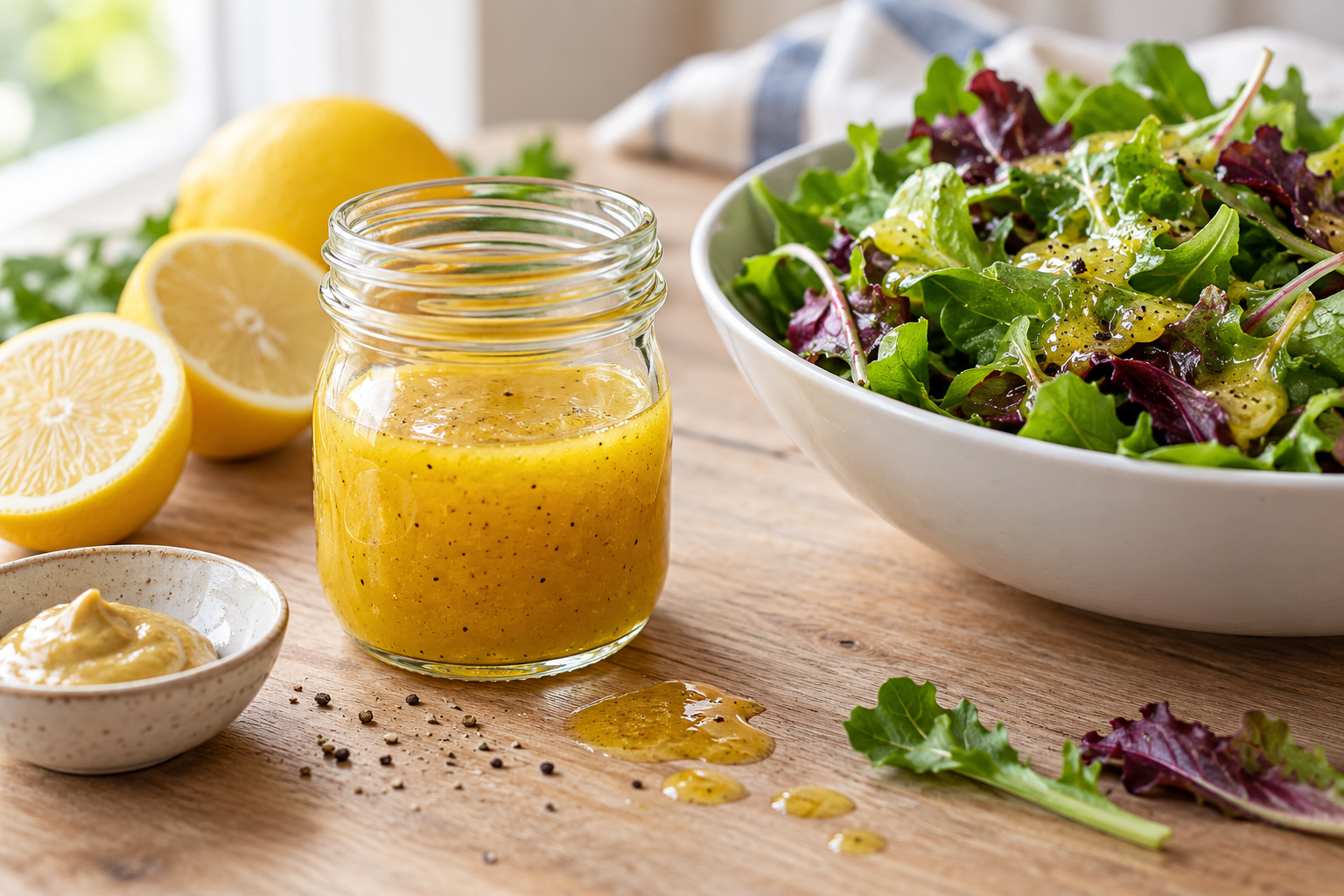
If you’ve ever finished a salad at First Watch and wondered what made the dressing taste so bright, the answer is probably simpler than you’d expect: fresh lemon, good olive oil, and just enough sweetness to soften the tang. First Watch hasn’t published its exact recipe, so this is a copycat in spirit, built around the flavors most home cooks associate with that dressing. It takes five minutes, needs no blender, and uses pantry staples. Shake it in a jar, toss it with greens, and you have a tangy, lightly sweet lemon dressing ready to go.
Why You’ll Love This Recipe
- Ready in 5 minutes. There is no cooking, no special equipment, and nothing to chop beyond a single garlic clove.
- Real lemon flavor. Fresh juice and zest give a clean citrus taste that bottled dressings rarely match.
- Balanced, not sugary. A small amount of honey rounds off the acidity without turning the dressing into a sweet one.
- Flexible. It works on delicate greens, grain bowls, roasted vegetables, and as a quick marinade.
- You control the ingredients. You decide the oil, the salt, and the sweetener.
Ingredients You’ll Need
This dressing has few ingredients, so each one matters.
Fresh lemon juice and zest. This is the backbone of the dressing. Two medium lemons give you enough juice, and the zest adds fragrant lemon oil that juice alone can’t provide. Bottled juice tastes flat by comparison, so it’s worth squeezing fresh.
Extra-virgin olive oil. It carries the flavor and gives the dressing body. Choose a mild, fruity oil rather than a very peppery one, which can compete with the lemon.
Dijon mustard. It is the emulsifier. A small spoonful helps the oil and lemon juice blend and stay creamy-looking for longer, and it adds a gentle savory note.
Honey. A touch of sweetness balances the acid. Pure maple syrup works just as well and is covered in the variations below.
Garlic, salt, and pepper. One finely grated clove adds depth without overpowering the lemon. Kosher salt makes the flavors taste brighter and more rounded.
You’ll find the exact amounts in the recipe card.
How to Make First Watch Lemon Salad Dressing
The method is simple, but the order matters. Instead of dumping everything together, build the base first and add the oil last.
- Zest before you juice. Zest the lemon first, since a squeezed lemon is much harder to zest. Then juice the lemons and remove any seeds.
- Combine the base. Add the lemon juice, zest, Dijon, honey, grated garlic, salt, and pepper to a small jar with a tight lid.
- Add the oil. Pour in the olive oil.
- Shake or whisk. Seal the jar and shake hard for 20 to 30 seconds, until the dressing looks slightly thickened and uniform. If you prefer a bowl, whisk the base first, then stream in the oil slowly while whisking.
- Taste and adjust. Dip a lettuce leaf into the dressing rather than tasting it straight, since the greens change how the flavors come across.
Expert Tips for Best Results
- Taste on a leaf. Dressing always tastes stronger on its own than on a salad. A leaf gives a realistic preview.
- Fix a dressing that’s too sharp. Add a small drizzle of honey or a little more oil, then shake again.
- Fix a dressing that’s too oily or flat. Add a squeeze of lemon juice and a pinch of salt.
- Start with less dressing. About 1 tablespoon per 2 cups of greens is a good start. You can always add more, but you can’t take it back out.
- Dress right before serving. Acid wilts tender greens quickly, so toss the salad just before it goes to the table.
- Grate the garlic. A fine grate disperses through the dressing evenly, so you won’t bite into a raw chunk.
- Use room-temperature ingredients when you can. The dressing emulsifies more easily than with cold oil straight from a cool pantry.
Variations and Substitutions
- Maple version: Swap the honey for the same amount of pure maple syrup for a slightly earthier sweetness. This also makes the dressing vegan.
- Shallot: Add 1 tablespoon of very finely minced shallot for a mild, savory edge.
- Herby: Stir in a pinch of dried oregano or Italian seasoning, or 1 tablespoon of finely chopped fresh parsley.
- Parmesan: Whisk in 2 tablespoons of finely grated Parmesan for a savory, almost Caesar-like twist.
- Creamy: Whisk in 1 tablespoon of plain Greek yogurt. Use this version within 3 days.
- Longer-lasting: Replace the fresh garlic with 1/8 teaspoon of garlic powder.
- Mustard: If you don’t have Dijon, use a mild yellow or whole-grain mustard, but start with a little less.
What to Serve With First Watch Lemon Salad Dressing
- Simple greens: Mixed greens, baby spinach, or arugula are the classic match.
- Arugula and fennel salad: Add shaved fennel and shavings of Parmesan.
- Chicken salads: It’s good on grilled chicken, avocado, and chopped vegetable salads.
- Grain bowls: Drizzle it over quinoa, farro, or rice with roasted vegetables.
- Roasted vegetables: Toss warm broccoli, asparagus, or potatoes in it right out of the oven.
- Brunch plates: Dress a small handful of greens to sit alongside eggs or avocado toast.
- Marinade or sauce: Use it on chicken or fish, then spoon a little extra over the cooked protein. Never reuse marinade that touched raw meat unless you boil it first.
Storage and Reheating
Store the dressing in an airtight jar in the refrigerator for up to 5 days. Because it contains raw fresh garlic, keep it refrigerated and don’t leave it out on the counter for long periods. If you use the creamy yogurt variation, use it within 3 days.
Olive oil can turn cloudy or partly solid when chilled. This is normal. Let the jar sit at room temperature for 10 to 15 minutes, then shake well before using. There is no need to reheat it, and warming it isn’t recommended.
Frequently Asked Questions
Is this the exact First Watch recipe?
No. First Watch hasn’t shared its official recipe, so this is a First Watch-style copycat based on the flavors commonly described: fresh lemon, olive oil, and a light touch of sweetness.
Can I use bottled lemon juice?
You can, but fresh juice tastes noticeably brighter, and you also want the zest from a fresh lemon. If you only have bottled juice, add a little extra zest from another lemon if you have one.
Why does my dressing separate?
Oil and lemon juice naturally separate over time. The Dijon helps hold them together, but it isn’t permanent. Just shake the jar before each use.
Can I make it without honey?
Yes. Use maple syrup, or leave out the sweetener entirely for a sharper, more tart dressing.
How much dressing does this make?
About 3/4 cup, enough for roughly 6 servings of 2 tablespoons each.
Final Thoughts
A good lemon dressing doesn’t need a long ingredient list, just fresh lemon, decent olive oil, and a little balance. Keep a jar of this in the fridge and you can turn plain greens into something that tastes much more finished in about a minute.
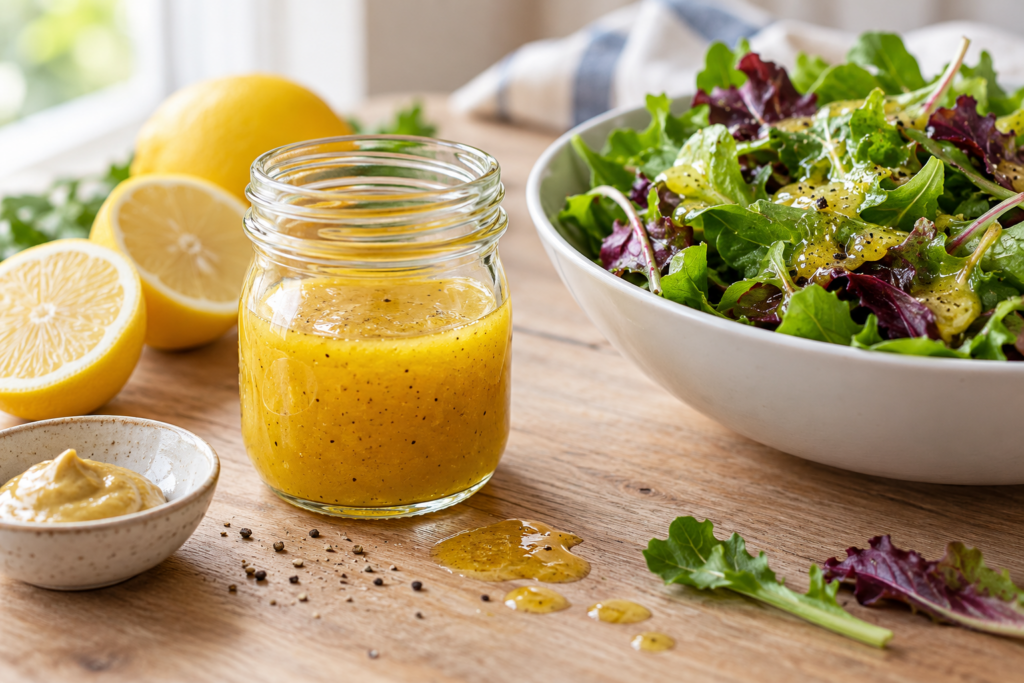
First Watch Lemon Salad Dressing
A bright, tangy lemon vinaigrette inspired by First Watch, made with fresh lemon juice, olive oil, Dijon, and a touch of honey.
Ingredients
Instructions
- Zest the lemon first, then juice the lemons and remove any seeds.
- Add the lemon juice, lemon zest, Dijon mustard, honey, grated garlic, salt, and pepper to a small jar with a tight-fitting lid.
- Pour in the olive oil, seal the jar, and shake hard for 20 to 30 seconds until the dressing looks slightly thickened and combined. Alternatively, whisk the base ingredients in a bowl and slowly stream in the oil while whisking.
- Taste the dressing on a lettuce leaf. Add a little more honey if too tart, a squeeze of lemon if too rich, or a pinch of salt if it tastes flat.
- Toss with salad greens right before serving, starting with about 1 tablespoon of dressing per 2 cups of greens.
Recipe Notes
Makes about 3/4 cup (6 servings of 2 tablespoons). This is a First Watch-style copycat, not the official recipe. Store in an airtight jar in the refrigerator for up to 5 days and shake well before using. The oil may solidify slightly when cold; let it sit at room temperature for 10 to 15 minutes. Because it contains raw fresh garlic, keep it refrigerated. Swap honey for maple syrup to make it vegan.