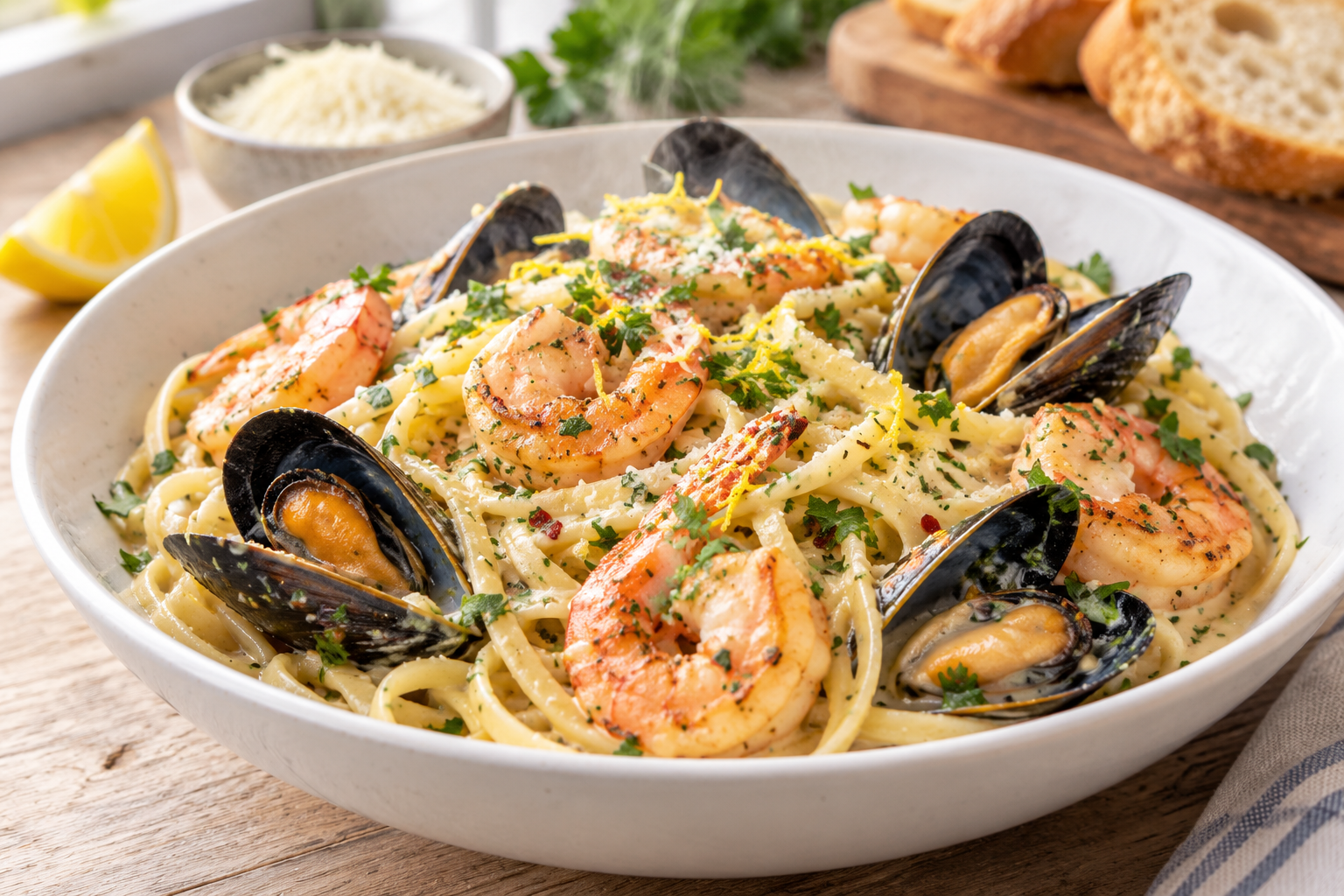
Creamy shrimp and mussel pasta tastes like restaurant food, but it comes together with one pot and one skillet in about 45 minutes. Juicy shrimp and tender mussels share a silky garlic-Parmesan sauce, brightened with lemon and built on the savory liquid the mussels release as they steam. There’s no wine involved, so the flavor stays clean, bright, and family-friendly. You’ll also learn the small steps that keep seafood tender instead of rubbery: how to clean mussels, when to pull the shrimp, and why the cheese goes in off the heat. Keep a loaf of crusty bread nearby, because you’ll want to mop up every drop.
Why You’ll Love This Recipe
- Restaurant flavor, weeknight effort. Mussels steam open in about five minutes, and the sauce is made in the same skillet you use for the shrimp.
- No wine required. Strained mussel liquor, a splash of broth, and fresh lemon give the sauce depth and acidity without alcohol.
- Two kinds of seafood, one balanced dish. Sweet, snappy shrimp and rich, briny mussels keep every bite interesting.
- Easy to scale. Cooking for two or six works with simple math, and the method stays the same.
Ingredients You’ll Need
This pasta uses a short ingredient list, so each item matters. Here’s what each one does.
Live mussels. Fresh mussels are the flavor engine. As they open, they release a salty, sweet liquid that becomes the base of the sauce. Buy mussels with tightly closed shells that smell like the ocean, not like anything sour or fishy. Farmed mussels, such as Prince Edward Island mussels, are widely available and usually cleaner than wild ones.
Large shrimp. Look for 16 to 20 count shrimp per pound, peeled and deveined. Larger shrimp are more forgiving and stay juicy. Frozen shrimp works well. Thaw it fully and pat it dry so it sears instead of steaming.
Linguine or spaghetti. Long, flat noodles carry a cream sauce nicely. Cook the pasta in well-salted water, since it seasons the whole dish.
Heavy cream and Parmesan. Heavy cream is stable and won’t curdle when simmered. Freshly grated Parmesan melts smoothly, while pre-shredded cheese often contains anti-caking agents that can make the sauce grainy.
Garlic, shallot, and lemon. Garlic and shallot build the aromatic base. Lemon juice and zest lift the richness so the sauce tastes bright, not heavy.
Seafood or chicken broth. A small amount gives the mussels something to steam in and replaces the wine most seafood pastas use.
Parsley and red pepper flakes. Parsley adds freshness at the end. A pinch of red pepper flakes adds gentle warmth without making the dish spicy.
How to Make Creamy Shrimp and Mussel Pasta
The full measurements are in the recipe card below. Here is the method, with the reasons behind each step.
- Prep the mussels. Rinse them under cold water and scrub off any grit. Pull off the stringy “beard” at the hinge. Tap any open mussel on the counter. If it doesn’t close within a minute or so, throw it out.
- Start the pasta. Boil the linguine in generously salted water until it is about one minute shy of al dente. It will finish cooking in the sauce. Save a mug of pasta water before draining.
- Steam the mussels. Bring the broth and a couple of smashed garlic cloves to a simmer in a wide, deep skillet or Dutch oven. Add the mussels, cover, and steam over medium-high heat for 4 to 6 minutes, until the shells open. Discard any that stay shut.
- Save the liquid. Lift the mussels out. Pour the cooking liquid through a fine-mesh sieve to catch grit and set it aside. Pull the meat from about two-thirds of the shells and keep the rest in the shell for serving.
- Sear the shrimp. Pat the shrimp dry and season them. Sear in olive oil and butter over medium-high heat for about 1½ to 2 minutes per side, until pink and opaque. Move them to a plate. They will finish cooking later.
- Build the sauce. In the same skillet, soften the shallot in butter, then add garlic and red pepper flakes for 30 seconds. Pour in about ½ cup of the strained mussel liquid and the cream, and simmer gently for 4 to 5 minutes until lightly thickened.
- Finish and toss. Take the pan off the heat and stir in the Parmesan a handful at a time with the lemon juice and zest. Add the pasta and a splash of pasta water, and toss until glossy. Fold in the shrimp and shelled mussels, scatter parsley on top, and nestle the in-shell mussels over the pasta.
Expert Tips for Best Results
- Taste before you salt. Mussel liquor, Parmesan, and salted pasta water all add sodium. Season at the very end.
- Don’t cook the shrimp all the way in the pan. Shrimp turn rubbery fast. Pull them as soon as they curl into a loose “C” and turn opaque, since they warm through again in the sauce. Fully cooked shrimp reach an internal temperature of 145°F.
- Keep the cheese away from the shells. Cheese tends to catch inside open mussel shells. Stir the Parmesan into the sauce first, then add the mussels.
- Add cheese off the heat. High heat can make Parmesan clump or turn oily. Stirring it in off the burner keeps the sauce smooth.
- Use pasta water to adjust. If the sauce looks tight, add a tablespoon or two of pasta water. The starch helps it cling to the noodles.
- Cook mussels only until they open. Overcooked mussels shrink and turn chewy. Once the shells are open, they’re done.
- Use a wide pan. Mussels cook evenly when they sit in a single layer or close to it.
Variations and Substitutions
- Frozen mussels. Fully cooked frozen mussels, in the shell or shelled, can replace fresh. Thaw them and add them at the end just to warm through. Use extra broth in place of the mussel liquor, plus a pinch more salt.
- Other seafood. Bay scallops or chunks of firm white fish can replace some of the shrimp. Sear scallops for about a minute per side.
- Lighter sauce. Swap half the cream for whole milk, and keep the heat low so it doesn’t separate.
- Add vegetables. Baby spinach, peas, or halved cherry tomatoes can be stirred in with the pasta.
- More heat. Increase the red pepper flakes or add a spoonful of Cajun seasoning to the shrimp.
- Gluten-free. Use a sturdy gluten-free linguine and cook it according to the package, since gluten-free pastas vary in how they hold up.
What to Serve With Creamy Shrimp and Mussel Pasta
This pasta is rich, so keep the sides simple and fresh.
- Crusty bread or garlic bread for dipping in the sauce
- A crisp arugula salad with lemon vinaigrette
- Roasted asparagus or garlicky green beans
- Steamed broccolini with a squeeze of lemon
- Sparkling water with lemon or a chilled sparkling juice for an easy dinner-party drink
Storage and Reheating
Seafood pasta is best eaten right away, but leftovers keep for a short time. Cool the pasta quickly and refrigerate it in an airtight container within two hours of cooking. Plan to eat it within two days for the best quality.
Reheat gently in a skillet over low heat with a splash of milk or cream, stirring often, until it reaches 165°F. Avoid the microwave on high, which can toughen the shrimp and mussels. I don’t recommend freezing this dish, because the cream sauce can separate and the seafood and pasta lose their texture.
Frequently Asked Questions
Do I need wine for this recipe?
No. The strained mussel liquid, broth, and lemon provide the savory depth and acidity that wine usually supplies. Skipping it keeps the dish alcohol-free.
What if some mussels don’t open?
Discard them. A mussel that stays closed after steaming should not be eaten. Likewise, throw out any mussel that is open before cooking and won’t close when tapped, as well as any with cracked or broken shells.
Can I use frozen shrimp and mussels?
Yes. Thaw frozen shrimp completely and pat it dry before searing. Cooked frozen mussels only need to be warmed through in the sauce, so add them at the very end.
Why did my cream sauce turn grainy or oily?
This usually happens when the sauce is too hot when the cheese goes in, or when pre-shredded cheese is used. Remove the pan from the heat, add freshly grated Parmesan gradually, and loosen the sauce with pasta water if needed.
Which pasta works best?
Linguine is the classic choice, and spaghetti, fettuccine, or tagliatelle also work well. Choose a long noodle that holds the creamy sauce.
Final Thoughts
Creamy shrimp and mussel pasta feels special without being complicated. Once you’ve scrubbed the mussels, the rest moves quickly, and the strained mussel liquid gives the sauce a flavor that cream and garlic alone can’t match. Serve it right away with plenty of bread, and you have a dinner that works for a quiet weeknight or a small celebration.
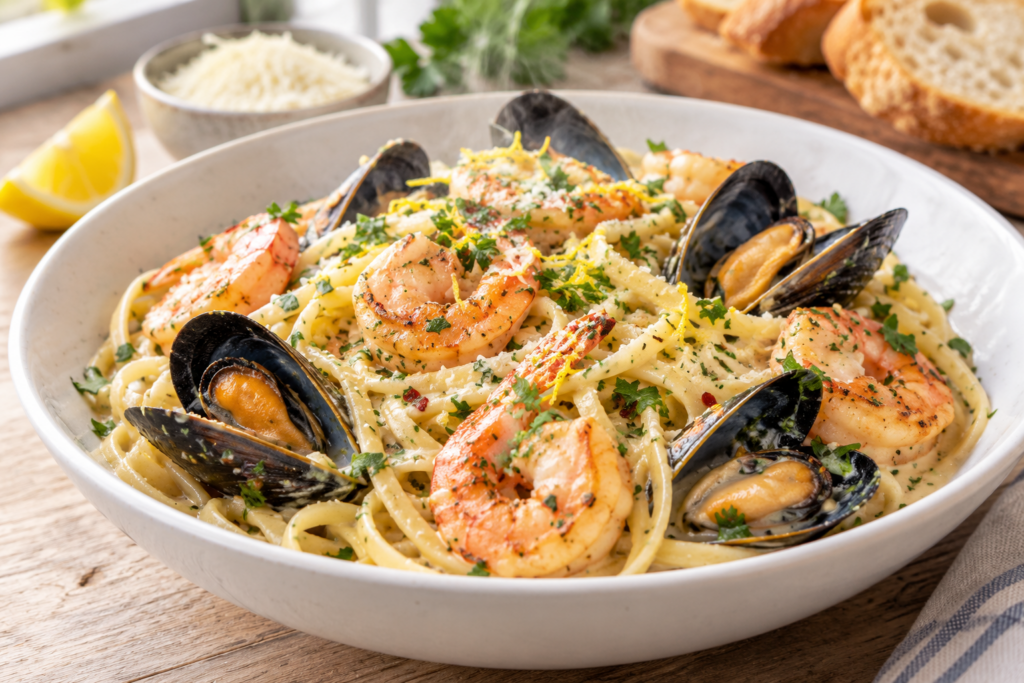
Creamy Shrimp and Mussel Pasta
Tender shrimp and mussels tossed with linguine in a garlic, lemon, and Parmesan cream sauce made without wine.
Ingredients
Instructions
- Rinse the mussels under cold water, scrub off any grit, and pull off the beards. Discard any mussels with cracked shells, and discard any open mussel that does not close when tapped.
- Bring a large pot of generously salted water to a boil. Cook the linguine until about 1 minute shy of al dente. Reserve 1 cup of pasta water, then drain.
- In a large, deep skillet or Dutch oven, bring the broth and the 2 smashed garlic cloves to a simmer. Add the mussels, cover, and steam over medium-high heat for 4 to 6 minutes, until the shells open. Discard any mussels that remain closed.
- Transfer the mussels to a bowl. Strain the cooking liquid through a fine-mesh sieve and reserve it. Remove the meat from about two-thirds of the shells and keep the remaining mussels in their shells for serving.
- Wipe out the skillet. Pat the shrimp dry and season with salt and pepper. Heat the olive oil and 1 tablespoon of the butter over medium-high heat and sear the shrimp for 1 1/2 to 2 minutes per side, until pink and opaque. Transfer to a plate.
- Reduce the heat to medium. Melt the remaining 2 tablespoons butter, add the shallot, and cook for 2 minutes. Add the minced garlic and red pepper flakes and cook for 30 seconds.
- Pour in 1/2 cup of the strained mussel liquid and the heavy cream. Simmer gently for 4 to 5 minutes, until slightly thickened.
- Remove the skillet from the heat. Stir in the Parmesan a handful at a time, then the lemon juice and zest.
- Add the linguine and toss, adding reserved pasta water 1 tablespoon at a time until the sauce is glossy and clings to the noodles.
- Gently fold in the shrimp and the shelled mussels. Taste and adjust the salt and pepper. Top with the in-shell mussels and the parsley and serve immediately. Shrimp should reach 145 degrees F, and leftovers should be reheated to 165 degrees F.
Recipe Notes
Season at the end, since mussel liquid, Parmesan, and pasta water all add salt. Discard any mussel that stays closed after steaming. Add the cheese off the heat for a smooth sauce. If using fully cooked frozen mussels, thaw them and add them at the end just to warm through. Refrigerate leftovers within 2 hours and eat within 2 days. Not recommended for freezing.