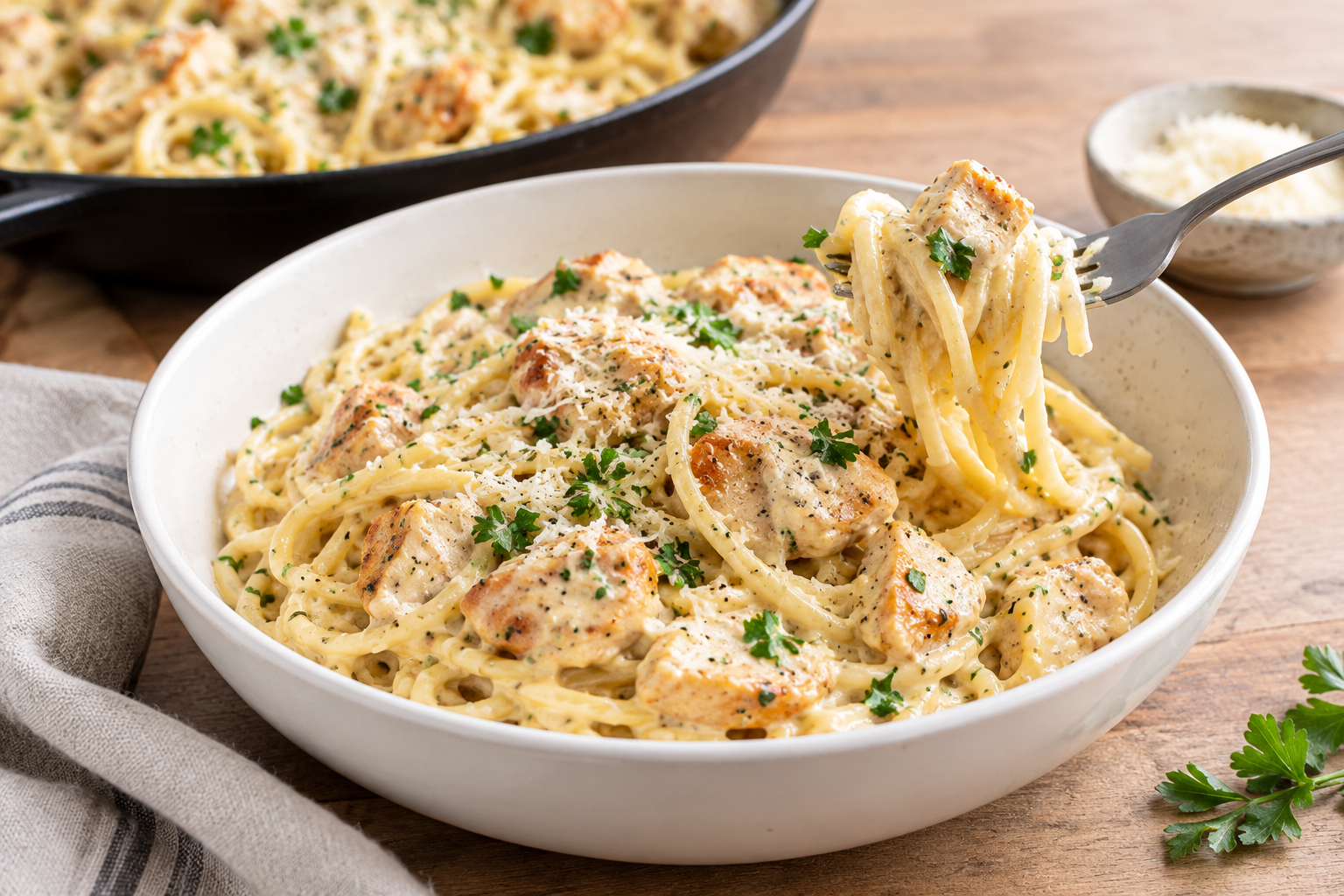
Creamy Parmesan chicken spaghetti is the kind of weeknight dinner that feels bigger than the effort it takes. Bite-sized chicken gets seared until golden, then tossed with spaghetti in a garlic-Parmesan cream sauce that clings to every strand. It all comes together in one skillet plus a pot for the pasta, and you don’t need canned soup or a long ingredient list. Below you’ll find what makes the sauce smooth, how to avoid the most common mistakes, and how to adjust the recipe to what’s in your kitchen.
Why You’ll Love This Recipe
- Ready in about 35 minutes. The pasta boils while the chicken sears and the sauce simmers, so nothing sits around waiting.
- Real sauce, no canned soup. Butter, garlic, broth, cream, and Parmesan build a sauce that tastes rich without being heavy-handed.
- Mostly pantry and fridge staples. If you keep pasta, cream, and a wedge of Parmesan on hand, you’re a grocery run for chicken away from dinner.
- Easy to adapt. Add spinach, swap the pasta shape, or use leftover chicken without changing the method.
- Good for feeding a crowd. It’s a mild, familiar flavor that works for kids and adults alike.
Ingredients You’ll Need
The full measurements are in the recipe card. Here’s what each main ingredient does and what to look for at the store.
Spaghetti. Any long pasta works, but spaghetti’s thin strands hold a cream sauce well. Pull it from the water about a minute before it’s fully al dente, because it finishes cooking in the sauce.
Boneless, skinless chicken breasts. Cut into 1-inch pieces, they cook fast and stay tender if you don’t crowd the pan. Chicken thighs also work and are more forgiving if you tend to overcook breast meat.
Garlic and butter. These build the flavor base. Fresh garlic is worth it here, since the sauce is simple and there’s nowhere for jarred garlic to hide.
Chicken broth. It loosens the pan drippings and keeps the sauce from tasting like straight cream. Low-sodium broth lets you control the salt, which matters because Parmesan is already salty.
Heavy cream. Its higher fat content makes it less likely to curdle when the cheese goes in. Lighter dairy can work, but it needs more care (see the FAQ).
Parmesan cheese. Buy a wedge and grate it yourself. Pre-shredded cheese usually contains anti-caking agents that can make the sauce gritty.
Italian seasoning, smoked paprika, and parsley. A light hand with seasoning keeps the Parmesan flavor in front, and parsley adds a fresh finish.
How to Make Creamy Parmesan Chicken Spaghetti
Here’s the process at a glance. The exact amounts and temperatures are in the recipe card.
- Cook the pasta first. Boil the spaghetti in well-salted water until just shy of al dente. Scoop out about a cup of the starchy pasta water before draining. You’ll use it to adjust the sauce later.
- Season and sear the chicken. Toss the chicken pieces with salt, pepper, garlic powder, and paprika. Cook them in a hot, oiled skillet in a single layer until browned and cooked through. If your skillet is crowded, work in two batches so the chicken sears instead of steams. Move it to a plate.
- Build the sauce base. Lower the heat to medium and melt the butter in the same skillet. Cook the garlic for about 30 seconds, just until fragrant, then pour in the broth and scrape up the browned bits from the bottom of the pan. Those bits carry a lot of flavor.
- Add the cream. Stir in the cream and let it simmer gently for a few minutes until it thickens slightly. Keep it at a gentle simmer, not a hard boil.
- Melt in the Parmesan. Turn the heat to low and add the cheese a handful at a time, stirring until each addition melts before adding the next. Stir in the Italian seasoning.
- Bring it together. Return the chicken and any juices to the pan, add the spaghetti, and toss. Add pasta water a couple of tablespoons at a time until the sauce coats the noodles smoothly. If you’re adding spinach, stir it in now and let it wilt.
- Rest and serve. Let the pan sit for a couple of minutes off the heat. The sauce thickens as it cools slightly. Finish with parsley and extra Parmesan.
Expert Tips for Best Results
- Lower the heat before adding cheese. Cheese added to a boiling sauce can clump or turn grainy. Low heat and gradual additions give a smooth, glossy sauce.
- Use the pasta water. The starch helps the sauce cling to the noodles and lets you loosen it without watering down the flavor.
- Don’t skip the browned bits. Scraping the pan after searing adds depth that cream alone can’t provide.
- Check the chicken temperature. Chicken is safely cooked at an internal temperature of 165°F. A quick-read thermometer takes the guesswork out and helps you avoid dry chicken.
- Season at the end. Parmesan and broth both add salt, so taste before adding more.
- Serve right away. This sauce is at its best fresh. As it sits, the pasta absorbs liquid and the dish gets thicker.
Variations and Substitutions
- Leftover or rotisserie chicken: Shred about 3 cups and stir it in at the end, just long enough to warm through. You can skip the searing step and build the sauce in a skillet with a little olive oil.
- Add vegetables: Baby spinach, sautéed mushrooms, broccoli florets, or sun-dried tomatoes all fit well. Cook sturdier vegetables before the sauce so they’re tender.
- Lemon-Parmesan twist: Add a little lemon zest and a squeeze of juice at the end for brightness. Add the juice off the heat so it doesn’t curdle the cream.
- Different pasta: Fettuccine, linguine, penne, or rigatoni all work. Adjust the cooking time to the package directions.
- Lighter sauce: Half-and-half can replace some or all of the cream. The sauce will be thinner and more sensitive to heat, so keep it on low and don’t let it boil after adding the cheese.
- A little heat: Red pepper flakes or a pinch of cayenne gives the sauce a gentle kick.
- Gluten-free: Use your favorite gluten-free spaghetti and follow its package timing. Gluten-free pasta tends to absorb more sauce, so keep extra pasta water handy.
What to Serve With Creamy Parmesan Chicken Spaghetti
Because the pasta is rich, a fresh or crisp side balances it nicely.
- A simple green salad with a light lemon vinaigrette
- Garlic bread or crusty Italian bread for the leftover sauce
- Roasted broccoli, asparagus, or green beans
- A caprese-style salad with tomatoes, mozzarella, and basil
- Steamed or roasted vegetables with a squeeze of lemon
Storage and Reheating
Refrigerator: Cool leftovers and refrigerate within 2 hours of cooking. Store in an airtight container for up to 3 to 4 days.
Reheating: Reheat in a skillet over low heat with a splash of milk, cream, or broth, stirring gently, until steaming hot. In the microwave, heat in short bursts and stir between each. Leftovers should reach an internal temperature of 165°F.
Freezing: Cream sauces can separate after freezing and thawing, so this dish is best enjoyed fresh or from the fridge. If you do freeze it, expect the texture to change somewhat, and use it within about 2 months. Thaw it in the refrigerator overnight and reheat gently with extra liquid.
Make-ahead tip: Cook the chicken and grate the cheese up to a day ahead and store them separately in the fridge. Make the sauce and pasta just before serving.
Frequently Asked Questions
Why did my Parmesan sauce turn grainy or clumpy?
The most common causes are heat that’s too high when the cheese goes in, adding all the cheese at once, or using pre-shredded cheese with anti-caking agents. Turn the heat to low, add freshly grated Parmesan gradually, and stir until each addition melts. If the sauce is already clumpy, take the pan off the heat and whisk in a splash of warm cream or pasta water.
Can I use pre-shredded Parmesan?
You can, but the sauce is usually smoother with a freshly grated wedge. If you’re using the pre-shredded kind, add it very slowly over low heat and expect a slightly less silky result.
Can I use rotisserie chicken?
Yes. Shred or dice about 3 cups of cooked chicken and add it near the end so it warms through without drying out. It’s a good shortcut for busy nights.
Can I make this without heavy cream?
Half-and-half works, though the sauce will be thinner and more likely to separate if it gets too hot. Keep the heat low and don’t boil the sauce after adding the cheese. Milk alone is not recommended, because it’s much more prone to curdling.
Is this a baked chicken spaghetti?
No, this version is made on the stovetop and served right away. If you prefer a baked casserole, you can transfer it to a baking dish, top it with a little extra cheese, and bake until bubbly. Add a bit more sauce liquid first, since baking dries the pasta out.
Final Thoughts
This creamy Parmesan chicken spaghetti is a reliable, comforting dinner you can pull together on a busy night. Keep the heat low when the cheese goes in, save some pasta water, and the sauce will come out smooth. Make it as written the first time, then try the spinach or lemon variation once you’re comfortable with the method.
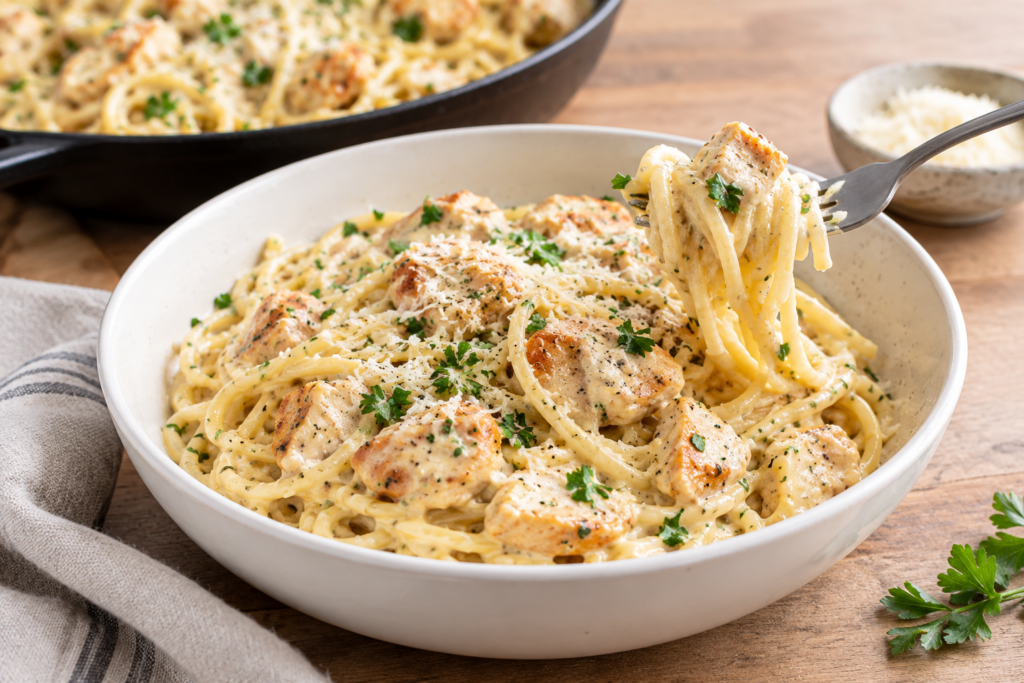
Creamy Parmesan Chicken Spaghetti
Tender seared chicken and spaghetti tossed in a silky garlic Parmesan cream sauce, all made in one skillet in about 35 minutes.
Ingredients
Instructions
- Bring a large pot of water to a boil and add 1 tablespoon kosher salt. Cook the spaghetti about 1 minute short of the package time for al dente. Scoop out 1 cup of the pasta water, then drain the spaghetti and set it aside.
- Toss the chicken with 1 teaspoon salt, the black pepper, garlic powder, and smoked paprika.
- Heat the olive oil in a large, deep skillet over medium-high heat. Add the chicken in a single layer, working in two batches if the pan is crowded. Cook for 5 to 7 minutes, turning occasionally, until golden brown and cooked through to an internal temperature of 165°F. Transfer the chicken to a plate.
- Reduce the heat to medium. Add the butter to the same skillet and melt it. Add the garlic and cook for about 30 seconds, until fragrant.
- Pour in the chicken broth and scrape up the browned bits from the bottom of the pan. Simmer for 2 minutes.
- Stir in the heavy cream and simmer gently for about 3 minutes, until slightly thickened. Do not let it boil hard.
- Reduce the heat to low. Add the Parmesan a handful at a time, stirring until each addition melts before adding the next. Stir in the Italian seasoning.
- Return the chicken and any juices from the plate to the skillet. Add the spaghetti and the spinach, if using. Toss until the spinach wilts and the pasta is coated, adding the reserved pasta water 2 tablespoons at a time until the sauce is smooth and clings to the noodles. Cook for 1 to 2 minutes more.
- Remove from the heat and let rest for 2 minutes. Top with parsley and extra Parmesan and serve right away.
Recipe Notes
Use freshly grated Parmesan from a wedge for the smoothest sauce, and add it gradually over low heat. Keep some pasta water on hand to adjust the sauce. Chicken is safely cooked at 165°F. Refrigerate leftovers within 2 hours and use within 3 to 4 days. Reheat gently with a splash of milk, cream, or broth until steaming hot (165°F).