Yes, you can bake with avocado oil, and it works especially well in the right recipes. Its mild flavor and liquid texture make it an easy swap for vegetable oil, canola oil, and even melted butter in muffins, quick breads, brownies, and many cakes. It isn’t a universal replacement, though. Cookies built on creamed butter and flaky pie crusts need solid fat, and not every bottle labeled “avocado oil” is as fresh or pure as it claims. Here’s what happens in the oven, how to swap it correctly, and how to pick a bottle worth baking with.
Why Avocado Oil Works in Baking
Oil and butter do different jobs. Oil is 100% fat, while butter is roughly 80% fat with the rest mostly water and milk solids. Because avocado oil stays liquid at room temperature, it coats the flour’s proteins and limits gluten development. The result is a tender, moist crumb that tends to stay soft longer than a butter-based one.
You’ll often see avocado oil praised for its high smoke point, which is commonly cited at around 520°F for refined oil and somewhat lower for unrefined. For baking, that’s mostly a non-issue. Oil mixed into batter is surrounded by water-rich ingredients like eggs, milk, and fruit, so it stays well below oven temperature while the bake sets. Most baking oils handle a 350°F oven without trouble. The smoke point matters far more for searing and frying.
What does matter in baking is flavor and freshness, which brings us to the next point.
Refined vs. Unrefined Avocado Oil for Baking
- Refined avocado oil: Pale yellow, mild, and neutral with a faint buttery note. This is the best default for baking, especially delicate recipes like vanilla cake or pancakes.
- Unrefined (virgin or extra virgin) avocado oil: Green, with a grassy, slightly buttery flavor. It can taste great in chocolate, citrus, spice, and carrot cakes, but it may stand out in recipes where you want a clean, neutral taste.
If you’re unsure, start with refined. It’s also usually the more budget-friendly option.
How to Substitute Avocado Oil in Baking
- For vegetable, canola, or other neutral oil: Swap 1:1.
- For olive oil: Swap 1:1. Expect a milder flavor.
- For melted butter: Use about ¾ of the amount. For example, replace 1 cup of butter with ¾ cup of avocado oil. Butter contains water, so if a cake batter looks noticeably thicker than expected, add a tablespoon or two of milk or water.
- For creamed or softened butter: Not recommended. Creaming butter with sugar traps air, and liquid oil can’t do that.
- For eggs: Don’t swap. Eggs provide structure, binding, and lift, and oil only adds fat.
- For mashed avocado: This is a different ingredient with its own technique. Avocado oil and mashed avocado aren’t interchangeable.
Where Avocado Oil Works Best (and Where It Doesn’t)
It shines in: banana bread and muffins, brownies, chocolate cake, carrot cake, zucchini bread, pancakes and waffles, cornbread, and citrus cakes.
It’s a poor fit for:
- Pie crust, biscuits, and scones, which need solid fat to create flaky layers
- Cookies that rely on creamed butter for structure, since oil-based doughs spread more
- Buttercream and whipped frostings, because oil won’t whip
- Shortbread and other recipes where butter flavor is the star
Expert Tips for Best Results
- Smell it first. Fresh avocado oil smells mild, faintly buttery, or grassy. If it smells like crayons, wax, or putty, it’s rancid. Don’t bake with it.
- Measure carefully. Oil is more forgiving than butter, but extra can make baked goods greasy.
- Mix until just combined. Overmixing builds gluten and toughens the crumb, even with oil.
- Check doneness early. Oil-based batters can brown slightly differently. Start testing with a toothpick a few minutes before the recipe’s time.
- Save it for where it counts. In strongly flavored recipes like spice cake, a cheaper neutral oil often tastes the same.
Is Your Avocado Oil the Real Thing?
Research from UC Davis found that a large share of the avocado oils tested in the US were either rancid before their expiration date or mixed with cheaper oils like soybean, sunflower, or safflower. A later study of store-brand oils found similar problems. Rancid oil loses antioxidants and can taste greasy or off, which shows up in your finished bake.
No single trick, like color or price, proves purity. The most practical steps are to buy from brands that publish third-party testing, choose dark glass bottles, check the best-by date, and trust your nose. Test results reflect the products sampled at the time, and brand quality can change.
Avocado Oil vs. Other Baking Oils
- Canola or vegetable oil: The cheapest option, with a neutral flavor and a reliable crumb.
- Extra virgin olive oil: More flavor, which works well in citrus, apple, and chocolate cakes.
- Coconut oil: Solid below roughly 76°F, so it behaves more like butter. Refined versions are neutral, while virgin versions taste like coconut.
- Refined avocado oil: Neutral and slightly buttery, which makes it a good all-purpose choice if the price suits you.
In most recipes, the texture difference between neutral oils is small. Choose based on flavor, availability, and budget.
Storage and Shelf Life
The oil: Keep it tightly capped in a cool, dark cupboard away from the stove, and use it within several months of opening. Check the label for specifics. If you refrigerate it, it may turn cloudy or thicken, which clears at room temperature.
Baked goods made with avocado oil: Store muffins and quick breads in an airtight container at room temperature for up to 2 days, or in the refrigerator for up to 5 days. For longer storage, freeze them for up to 3 months. Reheat muffins in the microwave for 15 to 20 seconds or in a 300°F oven for 8 to 10 minutes.
Try It: Easy Avocado Oil Banana Muffins
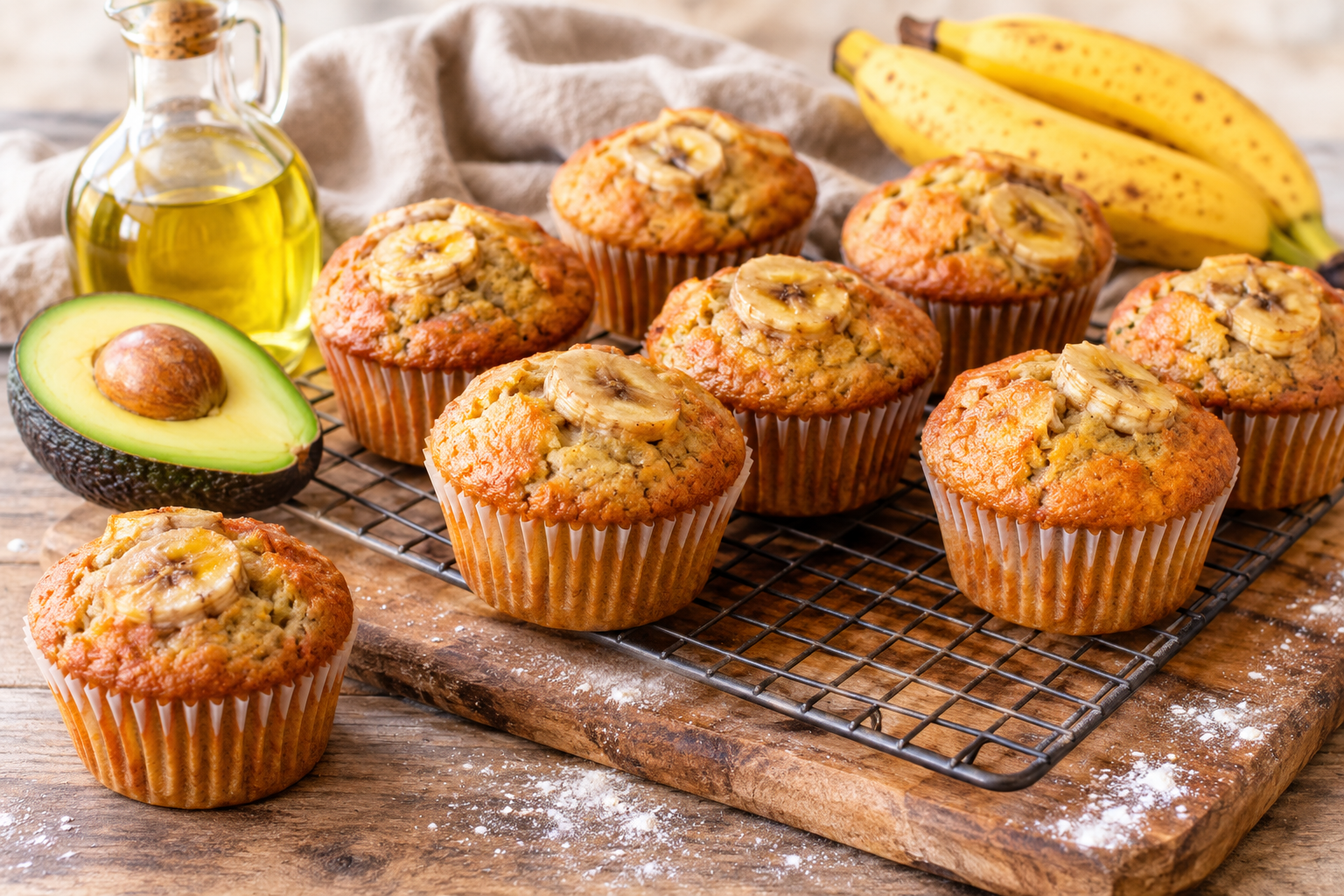
Banana muffins are one of the easiest ways to test avocado oil in baking. The bananas supply plenty of moisture and flavor, so a refined avocado oil blends right in. Use very ripe, spotty bananas for the best sweetness.
Frequently Asked Questions
Can I use avocado oil instead of butter in baking?
Yes, in recipes that use melted butter or oil, like muffins, brownies, and quick breads. Use about ¾ the amount of oil. Avoid it in recipes that need solid or creamed butter.
Will baked goods taste like avocado?
Refined avocado oil is neutral, so you won’t taste avocado. Unrefined oil has a grassy, buttery flavor that may be noticeable in lightly flavored recipes.
Is avocado oil better than vegetable oil for baking?
Not necessarily. The texture is very similar. Avocado oil offers a milder, slightly buttery flavor, while vegetable oil costs less. Pick based on taste and budget.
Can I use avocado oil in high-heat baking?
Yes. Its smoke point is higher than typical oven temperatures, and oil mixed into batter or dough rarely gets hot enough to smoke anyway.
Can avocado oil replace eggs?
No. Eggs provide structure and lift that oil can’t replace. Use a proper egg substitute if you need to bake egg-free.
Final Thoughts
Avocado oil is a dependable baking oil when you use it in the right places. Reach for it in moist, tender bakes like muffins, brownies, and cakes, use about ¾ of the butter amount when swapping, and skip it for flaky or creamed recipes. Buy a fresh, trustworthy bottle, and you’ll get a mild flavor and a soft crumb.
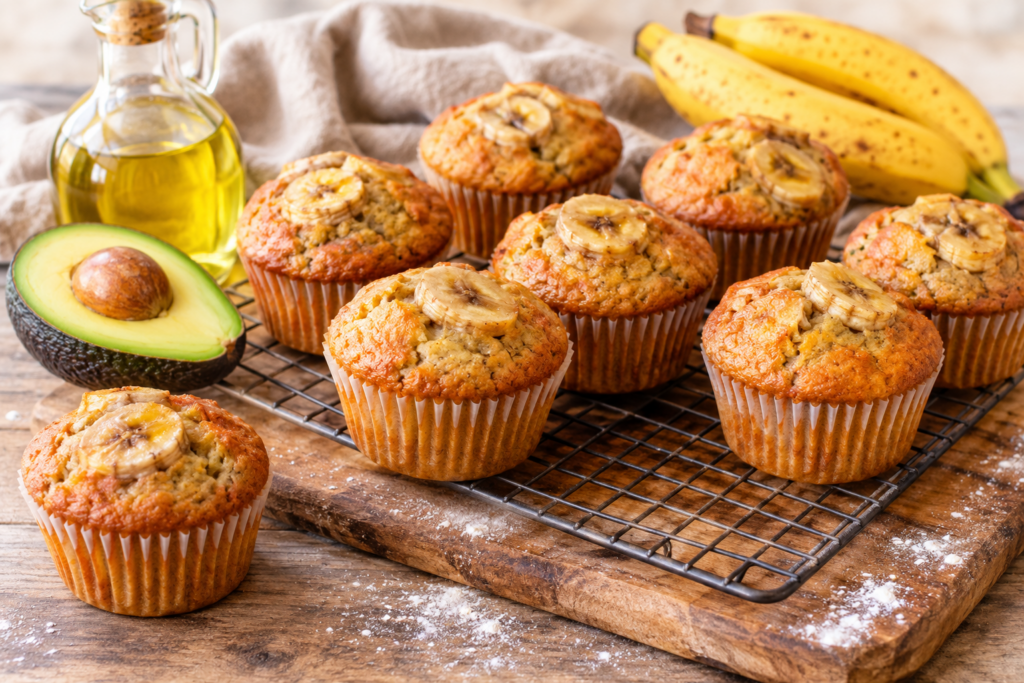
Easy Avocado Oil Banana Muffins
Soft, moist banana muffins made with mild avocado oil instead of butter. A simple way to try baking with avocado oil.
Ingredients
Instructions
- Preheat the oven to 350°F. Line a 12-cup muffin tin with paper liners or lightly grease it.
- In a large bowl, mash the bananas until mostly smooth. Whisk in the avocado oil, sugar, egg, and vanilla until combined.
- Sprinkle the baking soda, salt, and cinnamon, if using, over the batter and stir to combine.
- Add the flour and fold gently until just combined. A few small lumps are fine. Do not overmix.
- Divide the batter evenly among the muffin cups, filling each about two-thirds full.
- Bake for 18 to 22 minutes, until the tops are golden and a toothpick inserted in the center comes out clean or with a few moist crumbs.
- Cool in the pan for 5 minutes, then transfer to a wire rack to cool completely.
Recipe Notes
Use refined avocado oil for a neutral flavor. Store in an airtight container at room temperature for up to 2 days, in the refrigerator for up to 5 days, or freeze for up to 3 months. Stir in 1/2 cup chopped walnuts or chocolate chips if you like.