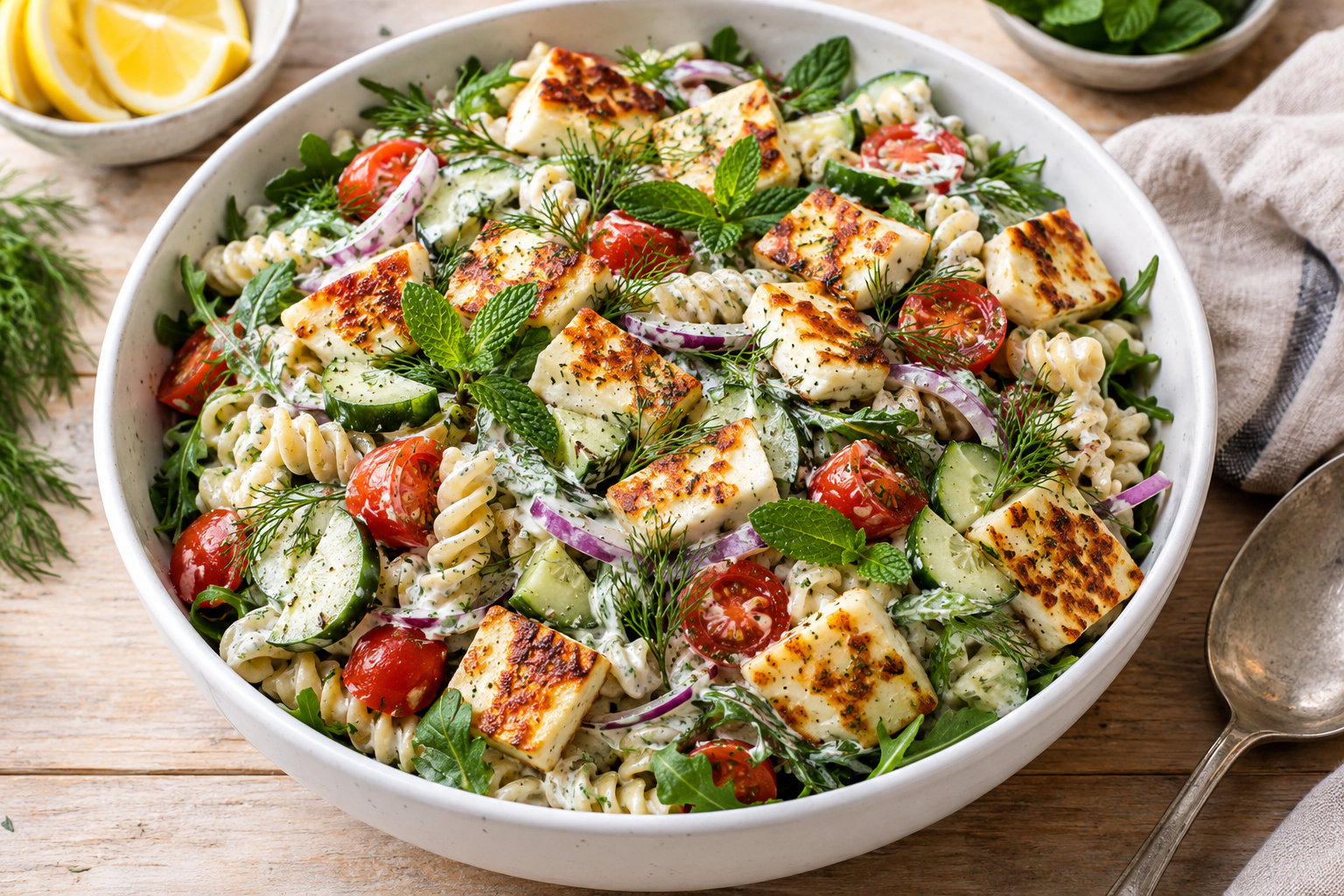
Creamy halloumi pasta salad pairs tender rotini with crisp cucumber, juicy cherry tomatoes, and golden cubes of pan-fried halloumi, all tossed in a tangy lemon-dill yogurt dressing. It works as a potluck side or a make-ahead lunch, and the cheese adds enough protein to make it feel like a real meal. The dressing is creamy without being heavy, and because halloumi is naturally salty, you barely need to season anything else. This guide covers how to keep the cheese pleasantly chewy, how to stop the pasta from soaking up all the dressing, and how to plan ahead.
Why You’ll Love This Recipe
- It’s creamy without a heavy sauce. Greek yogurt and a little mayonnaise give the dressing body, while lemon and dill keep it bright.
- The texture is the best part. Chewy pasta, crunchy cucumber, juicy tomatoes, and crisp-edged halloumi make every forkful different.
- It’s make-ahead friendly. The pasta and dressing hold up well in the fridge when you keep the halloumi separate.
- It’s filling enough for dinner. The cheese and pasta make it a satisfying vegetarian main, or a side for a crowd.
Ingredients You’ll Need
The full measurements are in the recipe card below. Here is what each main ingredient does and how to choose it.
Pasta. Short shapes with ridges or twists, like rotini, fusilli, or cavatappi, hold the creamy dressing in their grooves. Small shells and penne also work. Long pasta tends to clump in a cold salad.
Halloumi. This semi-hard cheese has a high melting point, so it browns in a pan instead of melting into a puddle. Look for it in the specialty cheese section near the feta. If you’re cooking for a strict vegetarian, check the label, since some halloumi is made with animal rennet.
Greek yogurt and mayonnaise. Whole-milk Greek yogurt gives the dressing its tang and thickness. A small amount of mayonnaise adds richness and helps the dressing cling instead of turning watery.
Lemon, garlic, and Dijon. Lemon juice and zest brighten the dressing, grated garlic adds a gentle bite, and Dijon helps everything blend smoothly.
Dill and mint. Fresh herbs keep the salad tasting light. If you only like one of the two, use extra of that one or swap in parsley.
Cherry tomatoes, cucumber, red onion, and arugula. These add sweetness, crunch, sharpness, and a peppery finish. Salt draws water out of vegetables, so cut them close to serving time.
How to Make Creamy Halloumi Pasta Salad
1. Cook and cool the pasta. Boil the pasta in well-salted water until al dente, following the package time. Drain it, rinse briefly under cold water, and shake it dry. Cooling the pasta first matters: warm pasta can thin out the dressing and make the yogurt look broken.
2. Whisk the dressing. In a large bowl, whisk the yogurt, mayonnaise, olive oil, lemon juice and zest, garlic, Dijon, honey if using, dill, mint, pepper, and a small pinch of salt. Taste it. It should be tangy, because the pasta will mellow it.
3. Prep the halloumi. Cut the block into roughly half-inch cubes and pat them very dry with paper towels. Dry cheese browns; damp cheese steams.
4. Pan-fry until golden. Heat olive oil in a nonstick skillet over medium-high heat. Add the halloumi in a single layer, working in batches if needed, and let it sit until golden on the underside. Turn the cubes and brown the other sides. A few minutes total is enough.
5. Toss and finish. Add the pasta, tomatoes, cucumber, and onion to the dressing and toss until coated. If it looks thick, stir in a tablespoon or two of cold water. Fold in the arugula, top with the warm halloumi, and serve.
Expert Tips for Best Results
- Don’t overcook the halloumi. Browned on the outside and soft inside is the goal. Overcooked halloumi turns tough and squeaky.
- Cut it on the thicker side. Half-inch cubes stay tender in the center. Very thin pieces tend to firm up.
- Cook it last. Halloumi is best soon after it leaves the pan, and it firms up as it cools. For a cold salad, fry it just before serving, or re-warm it later.
- Go easy on added salt. Taste the salad after the halloumi is in, then adjust. If your block is very salty, soaking it in cold water for a couple of hours before cooking can help. Pat it completely dry afterward.
- Hold back a little dressing. Pasta keeps absorbing dressing in the fridge. If you’re making this ahead, save a few spoonfuls to stir in before serving.
- Don’t crowd the pan. Too much cheese at once lowers the temperature and prevents browning.
Variations and Substitutions
- Pasta: Use whole wheat pasta for a nuttier flavor, or a gluten-free short pasta. Gluten-free pasta firms up faster in the fridge, so add a splash of water or lemon juice before serving.
- Dressing: Swap the mayonnaise for more Greek yogurt for a lighter version. Use parsley or basil if you don’t have dill or mint.
- Vegetables: Roasted red peppers, zucchini, olives, or chickpeas all fit well. Chickpeas add extra protein.
- Extra protein: Add grilled chicken or shrimp if you aren’t keeping it vegetarian.
- Instead of halloumi: Paneer pan-fries in a similar way, though it’s much milder, so season it. Feta won’t brown, but crumbled in at the end it gives a different, tangy version of the salad.
- Heat: Add a pinch of red pepper flakes to the dressing.
What to Serve With Creamy Halloumi Pasta Salad
- Grilled chicken skewers or lemon-herb shrimp
- A simple green salad with a light vinaigrette
- Warm pita or crusty bread
- Grilled or roasted vegetables
- Watermelon or fresh fruit for a summer cookout
Storage and Reheating
Store the dressed pasta salad in an airtight container in the refrigerator for up to 3 days. Keep the halloumi in a separate container for the best texture. To serve leftovers, loosen the salad with a splash of cold water or lemon juice, then re-warm the halloumi in a skillet over medium-low heat until it softens and crisps slightly. Microwaving can make it tougher.
Because the dressing contains dairy, don’t leave the salad out for more than 2 hours, or more than 1 hour when it’s above 90°F, such as at a picnic or outdoor party. Keep it in a cooler or over ice. I don’t recommend freezing this salad, since the dressing and fresh vegetables don’t thaw well.
Frequently Asked Questions
Can you eat halloumi cold in a pasta salad?
Yes. Halloumi can be eaten without cooking, but the texture is firmer and chewier when cold. Browning it in a pan and adding it warm gives the best result.
Can I make this halloumi pasta salad ahead of time?
Yes. Make the pasta and dressing up to a day ahead and keep the halloumi, arugula, and any extra dressing separate. Fry the halloumi and toss everything together just before serving.
Why does halloumi get rubbery?
Overcooking is the most common cause, and cooling makes the cheese firmer. Cook it for just a few minutes until golden, and serve it soon after cooking.
What kind of pasta is best for pasta salad?
Short, textured shapes like rotini, fusilli, or cavatappi work best because the dressing clings to them. Cook the pasta to al dente so it doesn’t turn soft after chilling.
Is this recipe vegetarian?
The ingredients contain no meat. Some halloumi is made with animal rennet, so check the label if you need it to be strictly vegetarian.
Final Thoughts
This creamy halloumi pasta salad is easy to scale up for a crowd and just as good as a packed lunch. Cook the halloumi last, keep a little dressing in reserve, and you’ll have a salad that holds up well from the first bowl to the last.
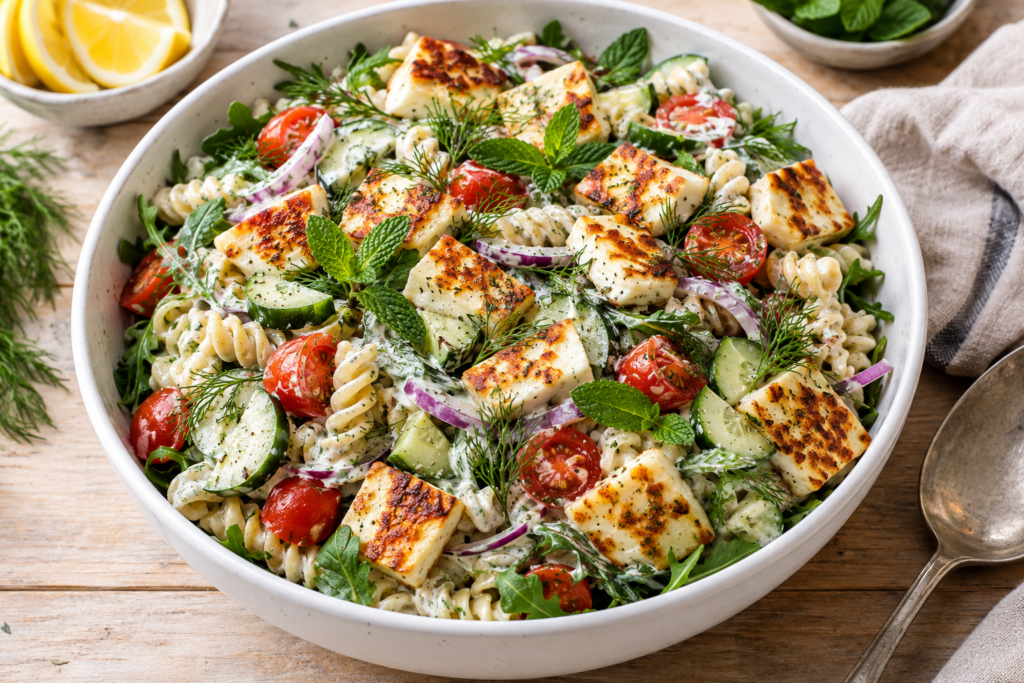
Creamy Halloumi Pasta Salad
A cold pasta salad with golden pan-fried halloumi, cucumber, and cherry tomatoes tossed in a creamy lemon-dill Greek yogurt dressing.
Ingredients
Instructions
- Bring a large pot of water to a boil and add 1 tablespoon kosher salt. Cook the pasta until al dente according to package directions, usually 9 to 11 minutes. Drain, rinse briefly under cold water, and shake well to remove excess water.
- In a large bowl, whisk together the Greek yogurt, mayonnaise, extra virgin olive oil, lemon juice, lemon zest, garlic, Dijon mustard, honey if using, dill, mint, black pepper, and 1/4 teaspoon kosher salt. Taste and adjust, keeping in mind the halloumi will add salt.
- Cut the halloumi into 1/2-inch cubes and pat very dry with paper towels.
- Heat 1 tablespoon olive oil in a large nonstick skillet over medium-high heat. Add the halloumi in a single layer, working in batches if needed. Cook without moving for about 2 minutes, until golden on the bottom, then turn and cook the remaining sides for 2 to 3 minutes more, until golden but still soft. Do not overcook.
- Add the cooled pasta, cherry tomatoes, cucumber, and red onion to the bowl with the dressing and toss until evenly coated. If the salad seems thick, stir in 1 to 2 tablespoons cold water. Gently fold in the arugula.
- Top with the warm halloumi and serve right away, or refrigerate the salad and add freshly cooked halloumi just before serving.
Recipe Notes
Cook the halloumi last and serve it soon after cooking, since it firms up as it cools. For make-ahead, store the halloumi separately and re-warm it in a skillet over medium-low heat. Save a few spoonfuls of dressing to refresh the salad before serving. Refrigerate leftovers in an airtight container for up to 3 days. Do not leave the salad out for more than 2 hours (1 hour if above 90°F). Check the halloumi label if you need it to be strictly vegetarian.