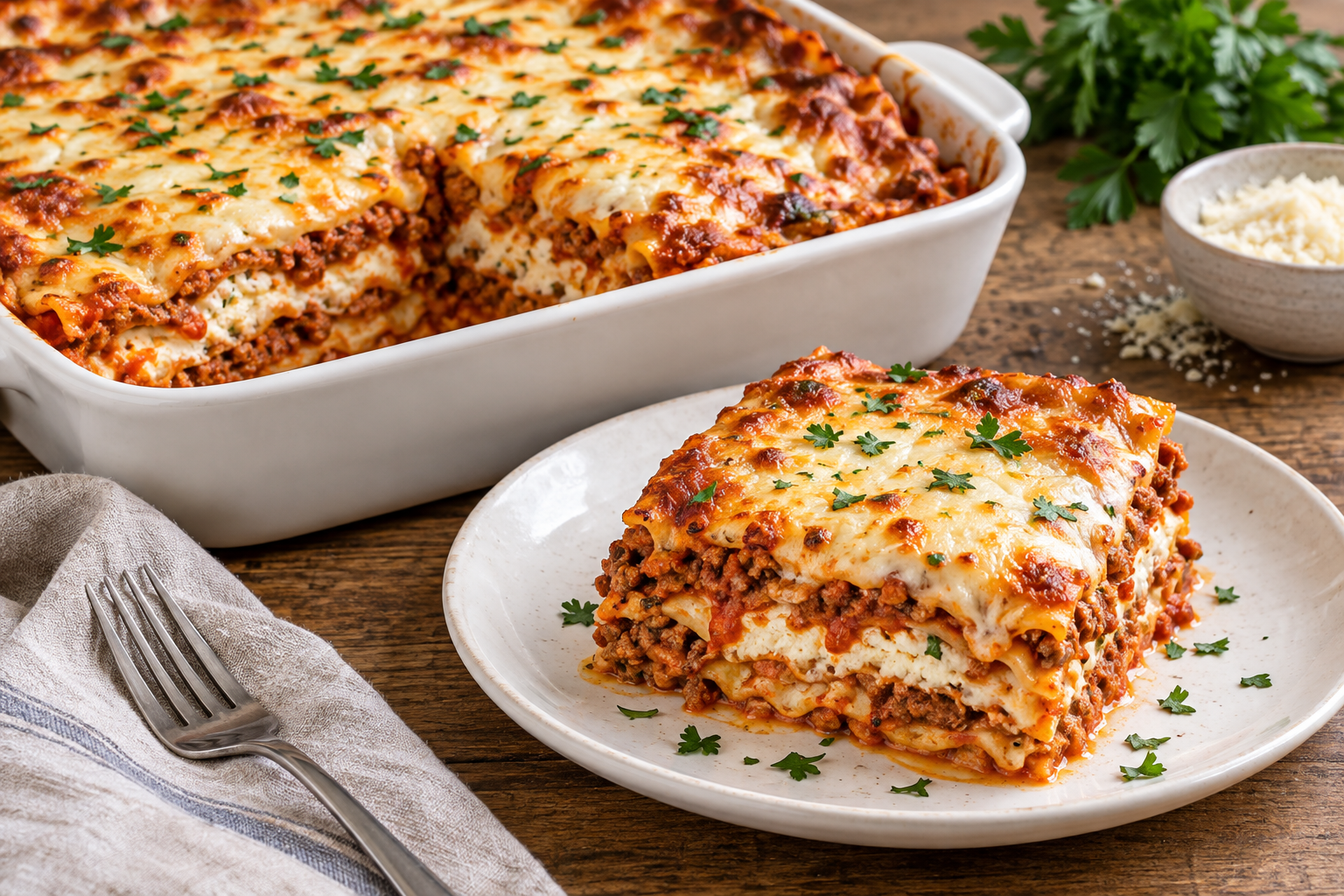
Classic beef lasagna is the dish people request for birthdays, potlucks, and Sunday dinners, and for good reason: tender noodles, a savory beef sauce, creamy ricotta, and a blanket of melted mozzarella. The trouble is that lasagna can turn out soupy, dry, or impossible to slice cleanly. This recipe is built to avoid all three. The sauce simmers until thick, the ricotta filling is bound with an egg so it holds its shape, and a short rest after baking lets everything set. Below you’ll find the reasoning behind each step, plus make-ahead, freezing, and substitution guidance.
Why You’ll Love This Recipe
- It slices cleanly. A thick sauce and a short rest after baking keep the layers from sliding apart on the plate.
- The flavor is balanced. Tomato paste, garlic, and dried herbs give the sauce depth without hours of simmering.
- The ricotta layer stays creamy. An egg and Parmesan keep it set instead of runny.
- It’s built for planning ahead. You can assemble it a day early or freeze it before baking.
- It feeds a crowd. One 9×13-inch pan makes 8 generous servings, with leftovers that reheat well.
Ingredients You’ll Need
The full measurements are in the recipe card. Here is what each main ingredient does and how to choose it.
Ground beef. 85% lean ground beef gives the sauce flavor without leaving a slick of grease. If you use a fattier blend, drain the extra fat after browning. Very lean beef (93% or leaner) works too, but the sauce can taste a little flat, so add the full amount of olive oil.
Crushed tomatoes, tomato sauce, and tomato paste. This trio is what makes the sauce thick and rich. Crushed tomatoes bring body, tomato sauce smooths it out, and tomato paste adds concentrated savory depth. Skipping the paste is the most common reason a homemade meat sauce tastes thin.
Onion and garlic. Finely diced onion melts into the sauce so you get sweetness without chunks. Garlic goes in near the end of the sautéing step so it doesn’t scorch and turn bitter.
Whole milk ricotta. Whole milk ricotta is creamier and releases less water than part-skim. Mixed with egg, Parmesan, and parsley, it becomes a seasoned layer that holds its shape when you cut into the lasagna.
Low-moisture mozzarella. Buy a block and shred it yourself if you can. Pre-shredded cheese often contains anti-caking starch and can melt less smoothly. Avoid fresh mozzarella here, because it releases a lot of water.
Lasagna noodles. This recipe uses regular noodles that are boiled briefly. Standard ripple-edge noodles are sturdy and easy to find. Details on no-boil noodles are in the variations section.
How to Make Classic Beef Lasagna
Follow the numbered steps in the recipe card. This section explains what to look for at each stage so the lasagna turns out the way it should.
Build a thick meat sauce
Brown the beef in a wide pot over medium-high heat and break it into small crumbles as it cooks. Let it sit for a minute or two between stirs so it actually browns instead of steaming. Stir in the onion, then the garlic, then the tomato paste, and cook until the paste darkens slightly. Add the tomatoes and seasonings and simmer uncovered for about 30 minutes.
The finished sauce should be thick enough that a spoon dragged across the bottom of the pot leaves a clear trail for a second. If it looks loose, keep simmering. Extra liquid in the sauce ends up on your plate.
Cook the noodles just short of done
Boil the noodles about one minute less than the package directs. They finish cooking in the oven, and noodles that start fully soft turn mushy. Drain them, lay them flat on a lightly oiled baking sheet or sheets of parchment so they don’t stick together, and keep a few extra in case some tear.
Mix the ricotta filling
Stir together the ricotta, egg, Parmesan, parsley, salt, and pepper until smooth. The egg is what sets the filling as it bakes, which gives you a creamy layer that doesn’t ooze out of the slice.
Layer it in the right order
Use a 9×13-inch baking dish and follow this order from the bottom up:
- A thin layer of sauce so the noodles don’t stick
- Noodles (4 per layer, slightly overlapping)
- Half the ricotta filling, then mozzarella, then sauce
- Noodles, the remaining ricotta filling, mozzarella, then sauce
- A final layer of noodles, the remaining sauce, and the rest of the mozzarella and Parmesan
Spread each layer to the edges so every bite has some of everything. Make sure the top noodles are fully covered with sauce so they don’t dry out and turn leathery.
Bake covered, then uncovered
Cover the dish loosely with foil (lightly greased so the cheese doesn’t stick) and bake at 375°F. Covering traps steam so the noodles cook through. Uncovering for the last stretch browns the cheese and thickens the top layer of sauce. Place the pan on a rimmed baking sheet to catch any bubbling over.
The lasagna is ready when the edges are bubbling and the center reads 165°F on an instant-read thermometer.
Rest before slicing
Let the lasagna sit for 15 to 20 minutes after it comes out of the oven. This is the step most people skip, and it makes the biggest difference for clean, upright slices. The sauce and cheese firm up as they cool slightly, and the layers stay together when you lift each piece out.
Expert Tips for Best Results
- Don’t skip the simmer. A thick sauce is the single best defense against watery lasagna.
- Season each component. The sauce, the ricotta filling, and the noodle water all need salt. Seasoning only one part leaves the others bland.
- Shred your own mozzarella. It melts more evenly and browns better than most bagged shreds.
- Use the right pan. A 9×13-inch dish at least 2 inches deep holds three layers. A shallower pan can bubble over.
- Grease the foil. A quick spray of oil keeps the cheese from pulling away when you remove the cover.
- Cut with a sharp knife. Use a straight downward press rather than a sawing motion, and wipe the blade between cuts if the cheese drags.
- Check the temperature. Since all the ingredients are cooked before baking, you’re reheating the lasagna through. 165°F in the center confirms it’s hot all the way.
Variations and Substitutions
- No-boil noodles: You can use them. Add about 1/2 cup of water to the sauce so there’s enough liquid to hydrate them, make sure the noodles are fully covered with sauce, and bake covered for the full time listed on the package.
- Beef and Italian sausage: Replace half the beef with mild or hot Italian sausage (casings removed) for more seasoning and richness.
- Cottage cheese instead of ricotta: Use the same amount. Drain it well and pulse it briefly if you prefer a smoother texture.
- Béchamel instead of ricotta: For a more traditional northern Italian style, swap the ricotta layer for a simple white sauce made with butter, flour, and milk.
- Add vegetables: Sautéed mushrooms or well-squeezed, thawed chopped spinach can be stirred into the ricotta layer. Squeeze out as much water as possible first.
- Ground turkey: It works as a lighter alternative. Add an extra tablespoon of olive oil to the pot, since turkey is leaner and can taste dry.
- Jarred sauce shortcut: If you’re short on time, replace the tomato products with about 6 cups of good-quality marinara. Keep the browned beef and simmer briefly to thicken.
What to Serve With Classic Beef Lasagna
Lasagna is rich and filling, so lighter sides balance the plate.
- A crisp green salad with a tangy vinaigrette
- Caesar salad
- Garlic bread or warm dinner rolls
- Roasted broccoli or green beans
- Sautéed spinach with garlic
- Roasted asparagus
Storage and Reheating
Refrigerator: Cool leftovers for no more than about 2 hours at room temperature, then cover tightly or transfer to airtight containers. Refrigerate for up to 3 to 4 days.
Reheating: Microwave individual portions until steaming hot, about 2 minutes, stirring or rotating once. To reheat a larger portion, cover with foil and warm in a 350°F oven until heated through, then check that the center reaches 165°F.
Make ahead: Assemble the lasagna without baking, cover tightly, and refrigerate for up to 24 hours. Add 10 to 15 minutes to the covered baking time, since it starts cold. Check that the center reaches 165°F.
Freezing unbaked: Assemble in a freezer-safe dish, wrap tightly with plastic wrap and foil, and freeze for up to 3 months for best quality. Thaw in the refrigerator for 24 hours, then bake as directed.
Freezing baked: Cool completely, cut into portions, wrap each one well, and freeze for up to 3 months. Thaw overnight in the refrigerator before reheating to 165°F.
Frequently Asked Questions
Why is my lasagna watery?
The usual causes are a sauce that wasn’t simmered long enough, wet ingredients like fresh mozzarella or unsqueezed spinach, and slicing too soon. Reduce the sauce until it’s thick, use low-moisture mozzarella, and rest the lasagna for 15 to 20 minutes before cutting.
Do I have to boil the noodles first?
Not necessarily. No-boil noodles work if the sauce has enough liquid and the noodles are fully covered. This recipe uses regular noodles boiled briefly because they give a more traditional texture and are easy to find.
Can I make lasagna the day before?
Yes. Assemble it, cover tightly, and refrigerate for up to 24 hours. Bake it straight from the refrigerator and add 10 to 15 minutes to the covered baking time.
How do I know when lasagna is done?
Look for bubbling edges and a golden top, and confirm the center reaches 165°F on an instant-read thermometer. Then let it rest before slicing.
Can I use cottage cheese instead of ricotta?
Yes, use an equal amount and drain it well first. The filling will be slightly tangier and a bit less creamy, but it sets nicely with the egg and Parmesan.
Final Thoughts
A good beef lasagna comes down to a thick sauce, a well-seasoned ricotta layer, and patience at the end. Get those three things right and you have a dependable crowd-pleaser that works for weeknights, holidays, and anything in between. Serve it with a simple salad and garlic bread, and save the leftovers for tomorrow.
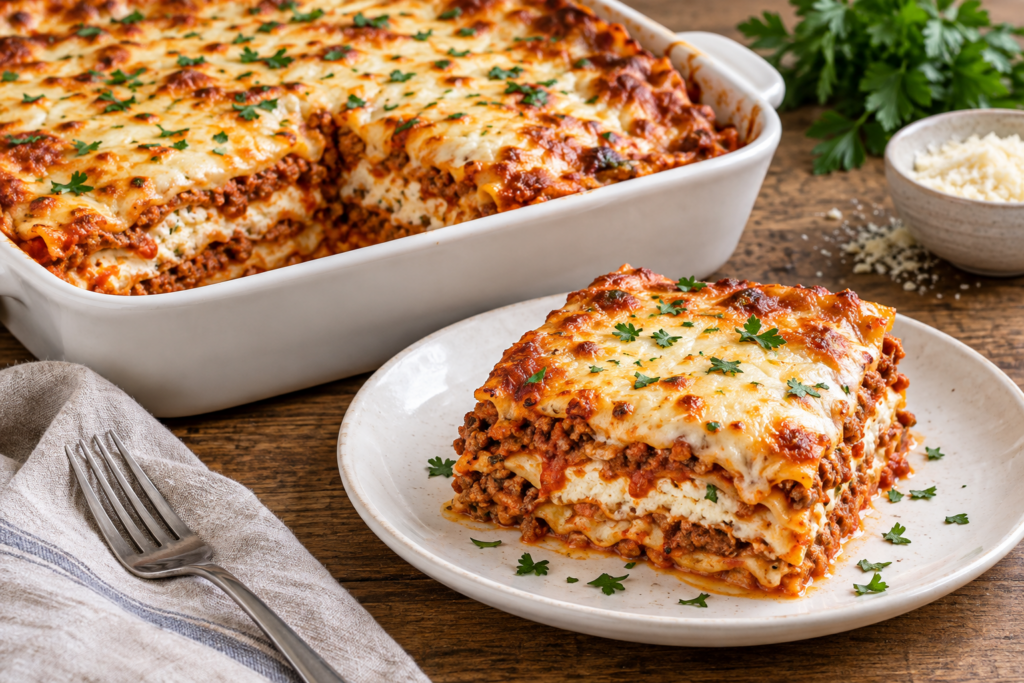
Classic Beef Lasagna
Layers of tender noodles, thick beef tomato sauce, creamy ricotta filling, and melted mozzarella, baked until bubbly and rested for clean slices.
Ingredients
Instructions
- Heat the olive oil in a large, wide pot over medium-high heat. Add the ground beef and cook, breaking it into small crumbles, until browned, about 8 minutes. Drain excess fat if needed, leaving about 1 tablespoon in the pot.
- Reduce the heat to medium. Add the onion and cook until softened, about 4 minutes. Add the garlic and tomato paste and cook, stirring, for 1 to 2 minutes until fragrant and the paste darkens slightly.
- Stir in the crushed tomatoes, tomato sauce, oregano, basil, 1 teaspoon salt, 1/2 teaspoon pepper, and the sugar if using. Bring to a gentle simmer, then cook uncovered, stirring occasionally, for 30 minutes until thick. Taste and adjust the seasoning.
- While the sauce simmers, bring a large pot of salted water to a boil. Cook the lasagna noodles for 1 minute less than the package directs. Drain, then lay the noodles flat on a lightly oiled baking sheet or parchment so they do not stick together.
- Heat the oven to 375°F with a rack in the center. In a medium bowl, stir together the ricotta, egg, 1/2 cup of the Parmesan, parsley, 1/2 teaspoon salt, and 1/4 teaspoon pepper until smooth.
- Spread 1 cup of the meat sauce over the bottom of a 9x13-inch baking dish at least 2 inches deep. Arrange 4 noodles over the sauce, slightly overlapping.
- Spread half of the ricotta mixture over the noodles, sprinkle with 1 cup of the mozzarella, and top with 1 1/2 cups of the sauce.
- Add 4 more noodles, the remaining ricotta mixture, 1 cup of the mozzarella, and 1 1/2 cups of the sauce.
- Top with the final 4 noodles and the remaining sauce, making sure the noodles are fully covered. Sprinkle with the remaining 1 cup mozzarella and the remaining 1/4 cup Parmesan.
- Cover the dish with foil lightly coated with cooking spray. Place on a rimmed baking sheet and bake for 25 minutes.
- Remove the foil and bake for another 20 to 25 minutes, until the edges are bubbling, the cheese is golden, and the center reads 165°F on an instant-read thermometer.
- Let the lasagna rest for 15 to 20 minutes before slicing so the layers set. Cut into 8 portions and serve.
Recipe Notes
Simmer the sauce until thick to avoid watery lasagna, and use low-moisture mozzarella. To make ahead, assemble without baking, cover, and refrigerate up to 24 hours; add 10 to 15 minutes to the covered baking time. To freeze unbaked, wrap tightly and freeze up to 3 months, then thaw in the refrigerator for 24 hours before baking. Refrigerate leftovers within 2 hours and use within 3 to 4 days. Reheat to 165°F. For no-boil noodles, add about 1/2 cup water to the sauce and cover all noodles with sauce.