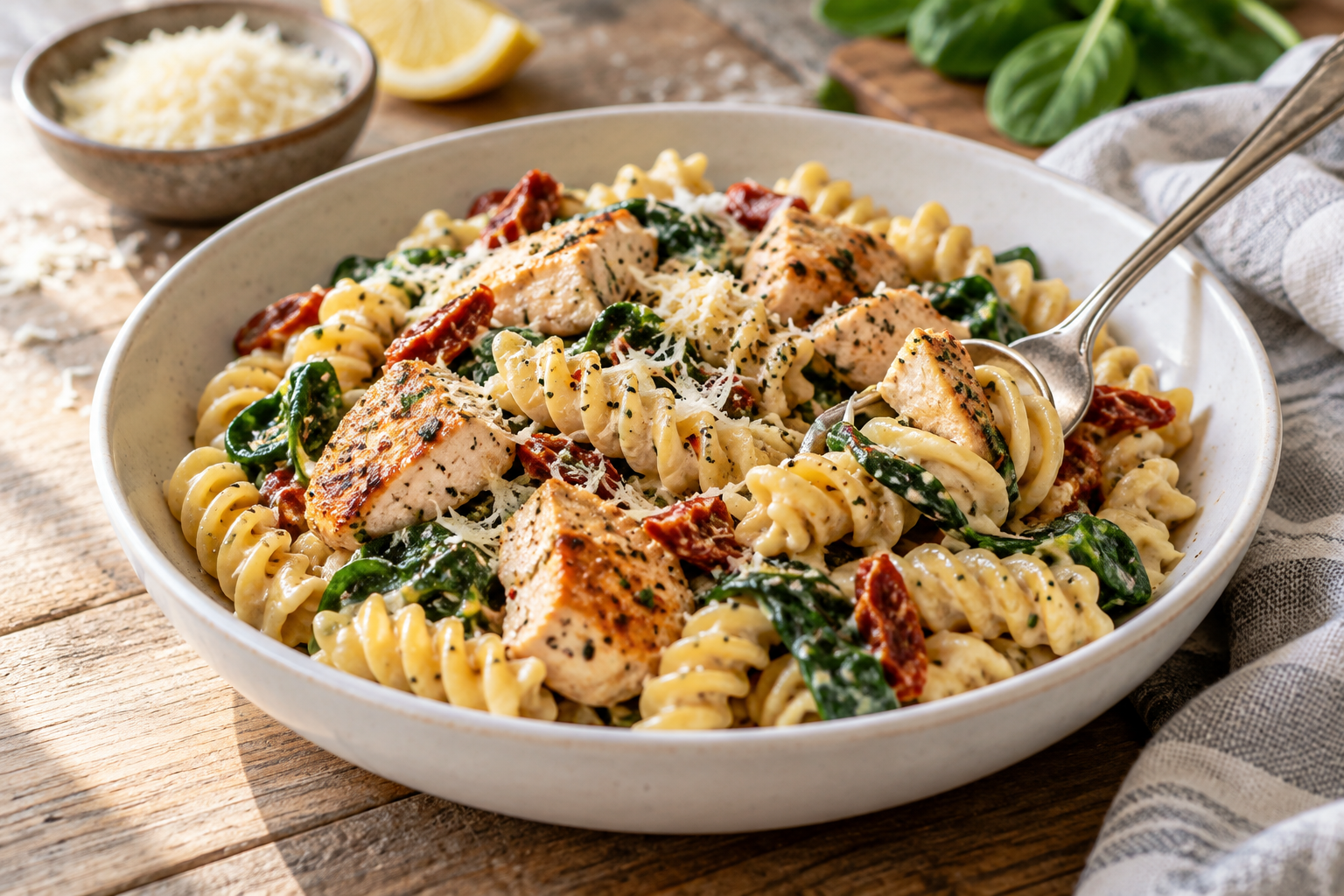
Pasta has a reputation for being all carbs and not much else, but a few smart choices change that quickly. Start with a higher-protein pasta, build a sauce around ingredients like cottage cheese or beans, and add a solid protein such as chicken, shrimp, or turkey. The result is a bowl that keeps you full without tasting like “diet food.” This guide explains the two main ways to boost protein, gives you a simple formula for any pasta night, and includes one full recipe: creamy chicken and spinach pasta with a cottage cheese sauce. Scroll down to the recipe card for the full ingredient list and steps.
Why You’ll Love This Approach
- It keeps pasta night familiar. You’re still eating a creamy, savory bowl of pasta, just with a more filling build.
- It works with what’s in your kitchen. Canned beans, tuna, frozen shrimp, and cottage cheese all do the job.
- It’s fast. Most of these dinners come together in 30 to 40 minutes in one pot and one skillet.
- It suits meal prep. Many pasta dishes hold up well in the fridge for lunches.
- It’s flexible. You can follow a formula instead of a fixed recipe and swap ingredients to fit your budget or diet.
Two Ways to Make Pasta High in Protein
Most high-protein pasta dishes use one of these two methods, and many combine them.
1. Use a protein-enriched pasta. Pastas made from chickpeas, lentils, or other legumes, and some wheat-based protein pastas, usually list more protein on the label than regular pasta. Brands vary a lot, so compare the nutrition panels. Legume pastas can cook faster and turn soft if overdone, so start tasting a minute or two early.
2. Keep regular pasta and build protein around it. Chicken, turkey, shrimp, tuna, beans, ricotta, and cottage cheese add protein to any pasta shape. This is a good route if you prefer the taste and texture of traditional pasta.
Ingredients You’ll Need
For the featured recipe, here is what each main ingredient does:
- Protein pasta (rotini or penne): Ridged shapes hold the sauce well. Regular pasta works too.
- Boneless, skinless chicken breast: A lean, mild protein that browns quickly when cut into bite-size pieces.
- Cottage cheese: Blended with Parmesan and pasta water, it turns into a smooth, creamy sauce with a protein boost. Use full-fat or low-fat, but avoid fat-free, which can blend less smoothly.
- Parmesan: Adds salt and savory depth, and helps the sauce cling to the pasta.
- Baby spinach: Wilts in seconds and adds color and a little freshness.
- Sun-dried tomatoes: Bring sweetness and tang to balance the creamy sauce.
- Lemon juice: A small squeeze at the end brightens the whole dish.
How to Make High-Protein Chicken and Spinach Pasta
The full measurements are in the recipe card. Here is the method and the reasoning behind it:
- Cook the pasta a minute short of the package time. It finishes cooking in the sauce. Save a cup of the starchy cooking water before draining.
- Sear the seasoned chicken in a hot skillet. Don’t crowd the pan, so the pieces brown instead of steaming. Cook until the chicken reaches 165°F (74°C) in the thickest piece.
- Blend the sauce. Cottage cheese, Parmesan, and a splash of pasta water go into a blender until completely smooth.
- Build the dish in the same skillet. Cook the garlic briefly, wilt the spinach, then pour in the sauce over medium-low heat.
- Warm the sauce gently. Don’t let it boil hard, which can make cottage cheese sauces grainy.
- Toss everything together. Add the pasta, chicken, and sun-dried tomatoes, then loosen with more pasta water as needed. Finish with lemon juice.
Build-Your-Own High-Protein Pasta Formula
Once you know the pattern, you can improvise. Pick one item from each group:
- Pasta: chickpea, lentil, or protein-enriched pasta, or regular pasta.
- Main protein: chicken breast, ground turkey, shrimp, Italian turkey sausage, canned tuna, or white beans.
- Sauce base: blended cottage cheese, ricotta, marinara, pesto, or a lemon-garlic olive oil sauce.
- Vegetable: spinach, broccoli, zucchini, peas, or roasted peppers.
- Finisher: Parmesan, lemon, fresh herbs, or red pepper flakes.
More High-Protein Pasta Ideas to Try
- Turkey bolognese with lentil pasta: Lean ground turkey simmered in tomato sauce with onion and garlic.
- Lemon garlic shrimp pasta: Quick-cooking shrimp with garlic, lemon, parsley, and a little Parmesan.
- Tuna and white bean pasta: A pantry meal with canned tuna, cannellini beans, lemon, and olive oil.
- Chicken sausage skillet pasta: Fully cooked chicken sausage with peppers, onions, and marinara.
- Chickpea pasta with pesto and chicken: Pesto and grilled chicken over chickpea pasta, with cherry tomatoes.
- Cold high-protein pasta salad: Pasta with chickpeas, diced chicken, cucumber, feta, and a lemon-yogurt dressing. Good for lunch boxes.
Expert Tips for Best Results
- Salt the pasta water well. It’s the main chance to season the pasta itself.
- Don’t overcook legume pasta. It can go from firm to mushy fast, so taste early.
- Keep the pasta water. The starch helps the sauce coat the noodles and lets you adjust thickness.
- Blend the cottage cheese thoroughly. Any leftover curds will show in the finished sauce.
- Use low to medium-low heat once the sauce goes in. Gentle heat keeps it silky.
- Use a thermometer for chicken. Pull it at 165°F (74°C) so it stays juicy and safe.
- Check labels. Protein content varies by pasta brand, so read the nutrition panel rather than assuming.
Variations and Substitutions
- Different protein: Swap the chicken for cooked shrimp, turkey sausage, or a can of drained chickpeas.
- Vegetarian: Use white beans or chickpeas instead of chicken, and a vegetarian-friendly hard cheese in place of Parmesan if needed.
- Ricotta instead of cottage cheese: It gives a richer, slightly sweeter sauce.
- Different greens: Kale, arugula, or chopped broccoli work. Cook heartier greens a few minutes longer.
- More heat: Add red pepper flakes or a pinch of cayenne.
- Gluten-free: Use a gluten-free chickpea or lentil pasta and check all labels.
What to Serve With High-Protein Pasta
- A simple arugula salad with lemon and olive oil
- Roasted broccoli or green beans
- Garlic bread or a crusty baguette
- A cucumber and tomato salad
- Steamed or roasted asparagus
Storage and Reheating
Cool leftovers within two hours of cooking and refrigerate them in airtight containers. Eat them within three to four days. Reheat until steaming hot, with the chicken reaching 165°F (74°C), and add a splash of water or milk to loosen the sauce. Cottage cheese sauces can change texture after freezing, so this recipe is best kept in the fridge rather than the freezer.
Frequently Asked Questions
Does high-protein pasta taste different from regular pasta?
It can. Legume-based pastas often have a slightly earthy flavor and a firmer or softer bite depending on the brand. Sauces with garlic, lemon, and cheese help balance this, and a protein pasta made mainly from wheat usually tastes closer to traditional pasta.
Can I make these recipes with regular pasta?
Yes. The protein in these dishes comes mostly from the chicken, beans, and cheese, so regular pasta works well. The total protein will be lower than with a protein-enriched pasta, so check labels if you’re tracking numbers.
Why did my cottage cheese sauce turn grainy?
Usually the sauce wasn’t blended long enough, or it was heated too aggressively. Blend until completely smooth, then warm it gently over medium-low heat.
Is this good for meal prep?
Yes, for three to four days in the fridge. Keep a little extra pasta water or milk on hand to loosen the sauce when reheating.
How can I add more protein without more meat?
Stir in white beans, chickpeas, or lentils, use cottage cheese or ricotta in the sauce, and choose a legume-based pasta.
Final Thoughts
High-protein pasta doesn’t require a special diet or hard-to-find ingredients. Choose a pasta you enjoy, build a sauce with cottage cheese or beans, and add a solid protein. Start with the chicken and spinach recipe below, then use the formula to make it your own.
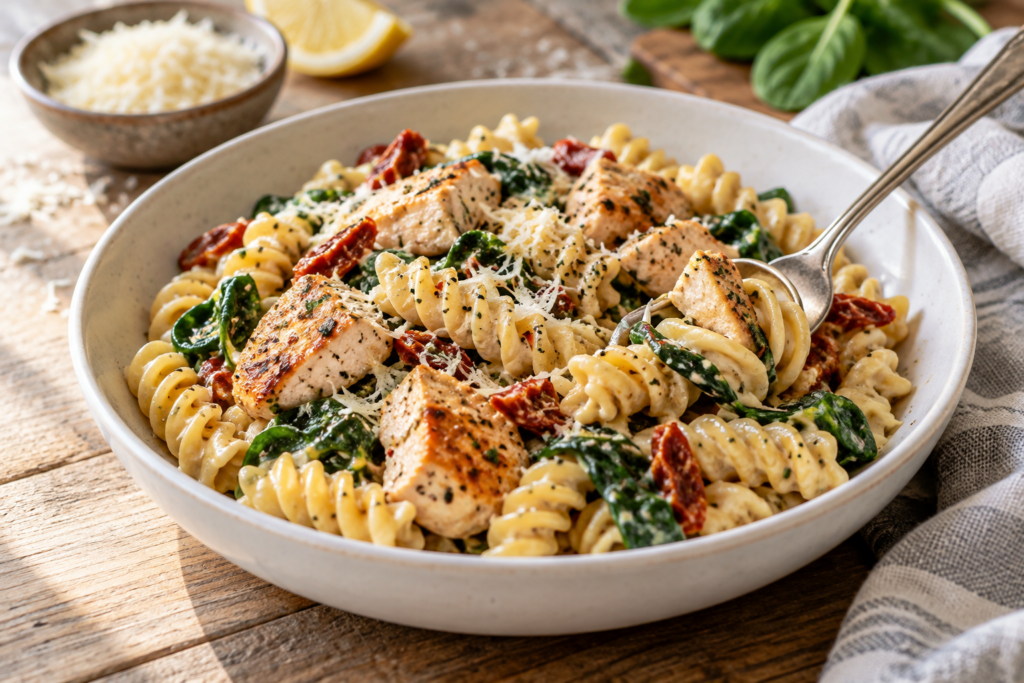
Creamy Chicken and Spinach High-Protein Pasta
A creamy, high-protein pasta with seared chicken, spinach, and sun-dried tomatoes in a smooth cottage cheese and Parmesan sauce.
Ingredients
Instructions
- Bring a large pot of salted water to a boil. Cook the pasta 1 minute less than the package directions. Reserve 1 cup of the pasta water, then drain.
- Pat the chicken dry and toss with 1/2 teaspoon of the salt, the black pepper, garlic powder, and smoked paprika.
- Heat the olive oil in a large skillet over medium-high heat. Add the chicken in a single layer and cook, turning occasionally, for 5 to 7 minutes, until browned and the internal temperature reaches 165°F (74°C). Transfer to a plate.
- In a blender, combine the cottage cheese, Parmesan, 1/2 cup of the reserved pasta water, and the remaining 1/4 teaspoon salt. Blend until completely smooth.
- Reduce the skillet heat to medium-low. Add the garlic and cook for 30 seconds, then add the spinach and stir until wilted, about 1 to 2 minutes.
- Pour in the blended sauce and stir gently for 2 to 3 minutes until warmed through. Do not let it boil.
- Add the cooked pasta, chicken, and sun-dried tomatoes. Toss to coat, adding more pasta water a tablespoon at a time until the sauce is silky.
- Stir in the lemon juice, add red pepper flakes if using, taste, and adjust the salt. Serve immediately.
Recipe Notes
Blend the cottage cheese until completely smooth and keep the heat gentle once the sauce goes in to avoid a grainy texture. Protein content depends on the pasta brand, so check the label. Refrigerate leftovers within 2 hours and eat within 3 to 4 days. Reheat until steaming hot, with a splash of water or milk to loosen the sauce.